


Dear every body,
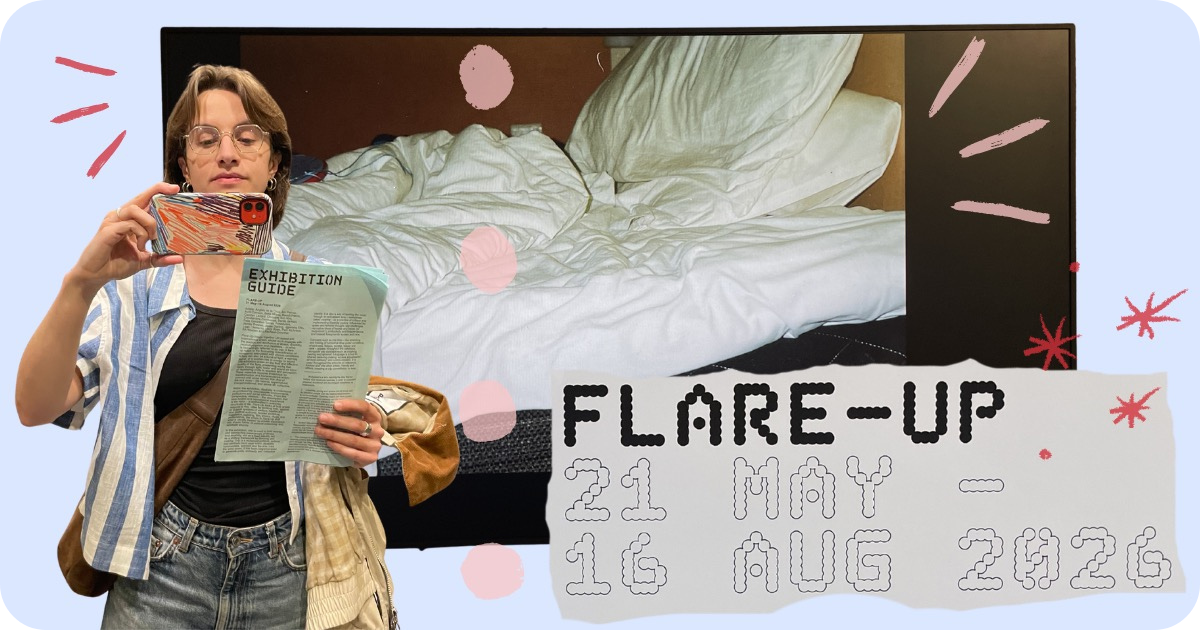
On a recent summer’s afternoon, I shut my laptop, bunked off work a bit early, and decided to visit Flare-Up, an exhibition by disabled artists at Goldsmiths CCA in south-east London.
I downed a mug of tea and began the walk to the bus stop. But when the bus I was meant to catch drove suddenly past me, I found myself wrestling with a decision that felt disproportionately enormous. Should I… run?
As a teenager, I was quite a fast runner, winning medals on school sports days (which I feel I’m allowed to brag about now a. enough time has passed and b. adulthood has been punctuated more by illness than athleticism), but that was over fifteen years ago, and I hadn’t run since.
A hundred metres stood between me and the bus stop.
Before I had time to decide if the decision to run was a sensible one, my legs started moving, then my arms, and I wasn’t sure why or how or whether I should be, but I was, somehow, I was running.
Miraculously, I caught the bus. Finding a seat at the back, I wrestled out of my leather jacket. My legs were throbbing and the fastness of my heartbeat was alarming. I tried to reassure myself that my breath would soon return to normal. That however I felt now, I hadn’t caused myself any permanent damage.
When you live with chronic illness, it often feels like your every decision has to be weighed before a jury. On this occasion, I knew that running for the bus carried a possibility of later punishment. But this time, I suppose, I wanted to get to the exhibition even more than I feared a potential flare-up.
Still, what would my body do next?

Flare-Up (21 May—16 August 2026) is London’s first major institutional exhibition exploring the poetics and aesthetics of illness, disability, neurodivergence and Deafness. As I explored in my recent comic, a ‘flare-up’ refers to an exacerbation of symptoms of chronic illness, but in this context the word is suggestive also of other its meanings: an outburst, a blaze, or a surge of light.
The exhibition brings together new and existing work by nineteen UK and international artists, most of whom are disabled but all of whom share an affiliation with the political, aesthetic or cultural term crip. The exhibition guide defines crip as a “shifting framework for thinking and making”, which is “used to hold diverse and intersecting experiences of illness and disability.”
In layman’s terms, crip is to disabled what queer is to gay; crip is a noun, as well as a verb; crip was once an academic term, but its usage is rapidly gaining momentum and understanding in disability arts and politics. Crip is a word that has been reclaimed.
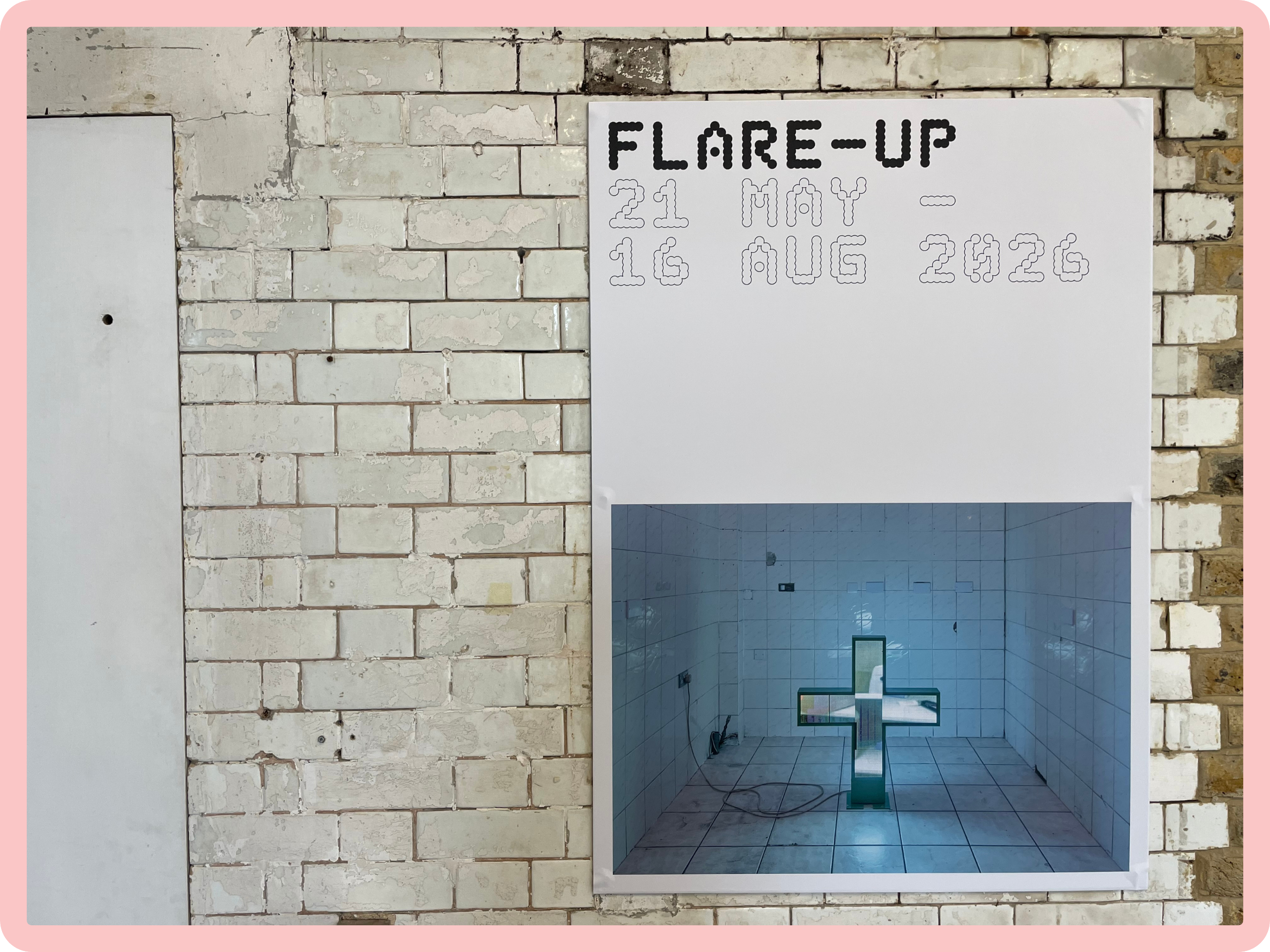
Arriving in the gallery slightly exhausted, I’m quick to suss out the availability of seating. I pick up a folding stool from reception (in the last few years, these seem rapidly to have become available in every art gallery), and soon find out that I needn’t have, because seating has been carefully considered throughout the exhibition space. In anticipation, probably, of the arrival of disabled guests, white metal chairs and utilitarian wooden benches have been softened with a thick layer of sponge.
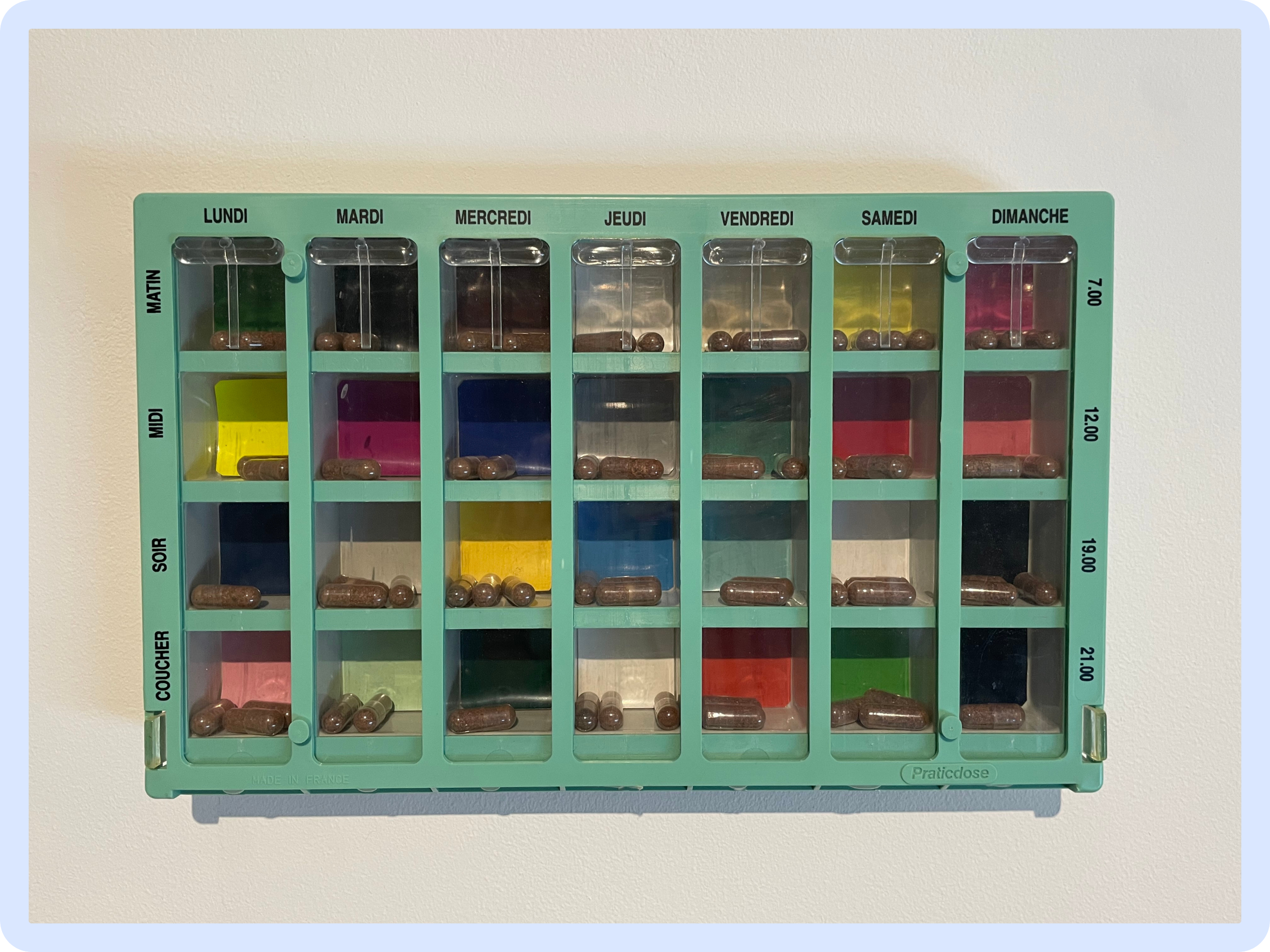
I make my way downstairs, into the basement gallery. Dark and quiet, with only one other visitor, I feel almost as if I have stepped into a church. I spend a while peering at Pillbox of Dungeness Seed Bombs (2018) by Benoit Piéron, a green pillbox of capsules filled with seeds from Derek Jarman’s garden at Prospect Cottage in Dungeness. Filling my own weekly pill boxes is a time-consuming and deeply unglamorous ritual that I’m forced to perform every Sunday, so I feel quite moved to see how someone else has had the imagination to turn such a boring task of medical admin into something so inspired and beautiful.
I am also captivated by Jamila Prowse’s moving image work, Flare: the muted outline of a body in bed as a camera flash overtakes the scene (2025). Photos taken over a summer of illness are accompanied by an autobiographical voiceover narration which has the precision of poetry. “A whole summer of bed,” Prowse says. “Never feeling the sun on my face. It feels like mocking, the insistence to continue without me.”
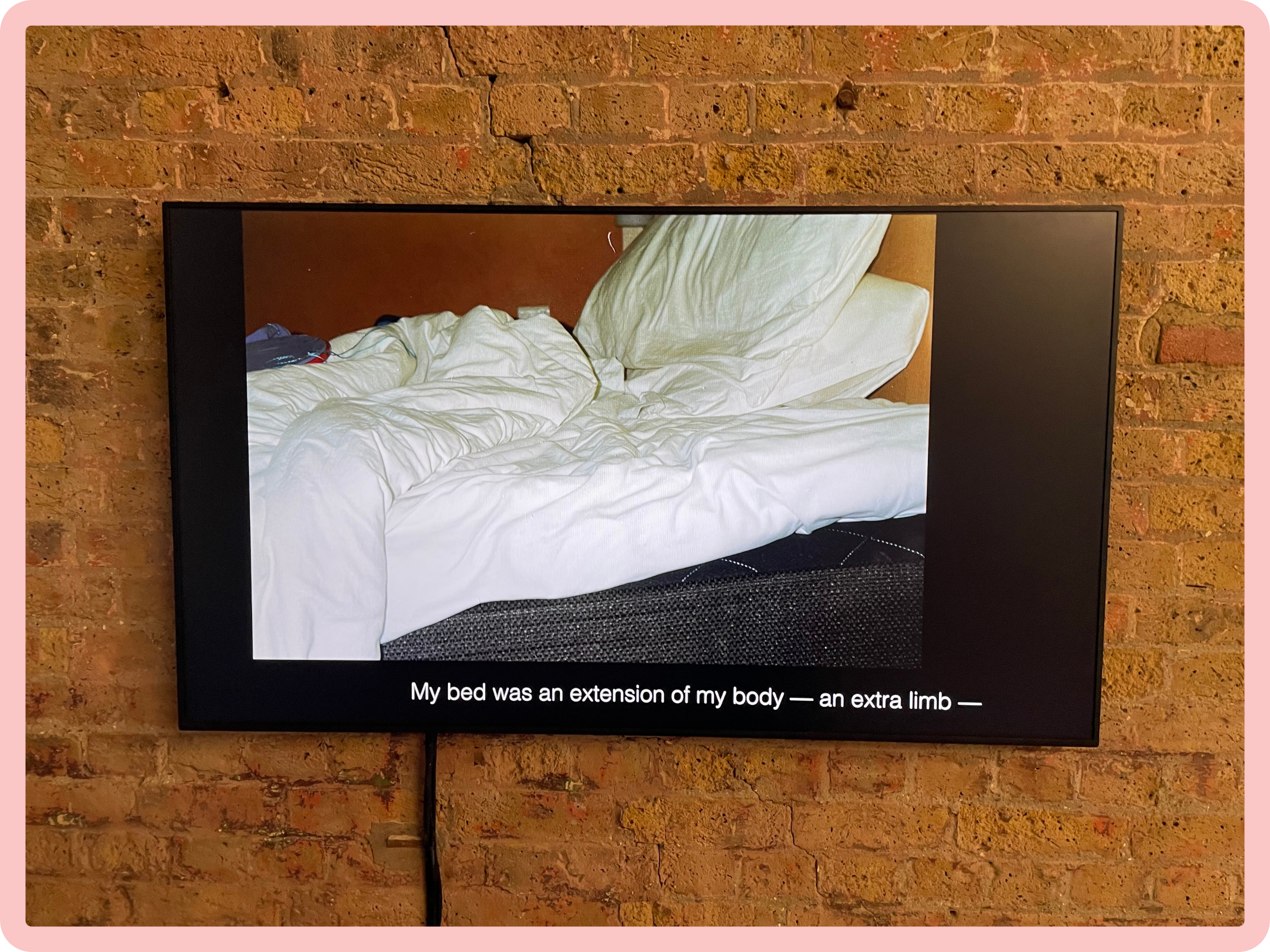
Prowse resents the monotony of illness (describing her wardrobe as an “unforgiving greyscale of repetition”), and fears, even from within a flare-up, that she may have further still to fall: “The imminence of a crash forever looms on the periphery.”
Prowse’s film lovingly references another artist, the late Lizzy Rose, whose own film is exhibited just one wall away. Lizzy Rose’s Sick, blue sea (2018), is about a chronically ill teenage sperm whale who starts a Tumblr blog. The whale’s blog writing is interrupted by waves of nausea (“All I can think about is feeling sick”), descriptions of which are repeated like a refrain, becoming increasingly monosyllabic as the symptoms intensify (“No thoughts, can’t think, too sick”).
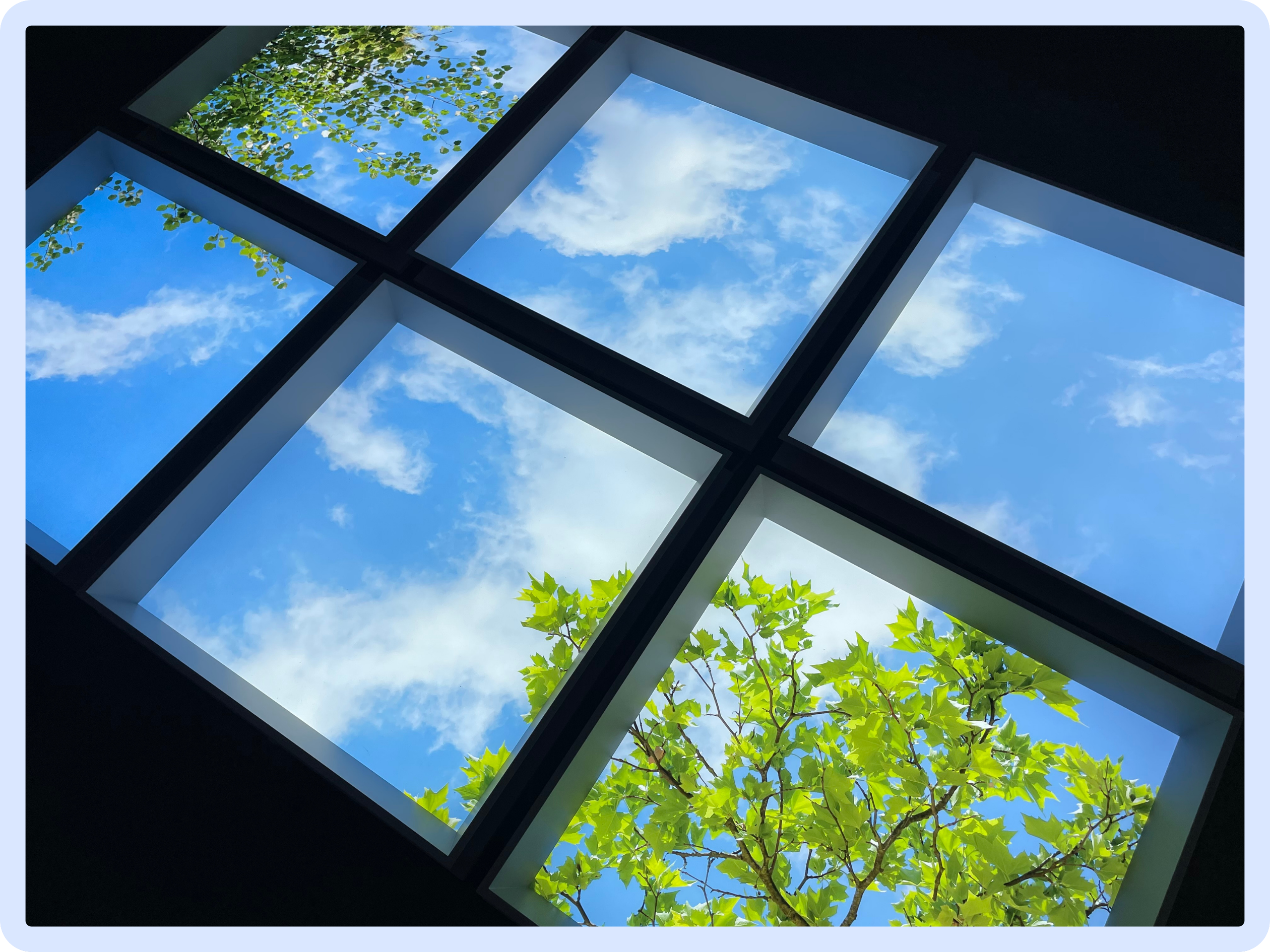
My highlight from the downstairs gallery is Carolyn Lazard’s Into the Wide Blue Yonder, an artificial skylight which is unexpectedly, and somewhat disorientatingly, laid not on the ceiling but flat on the floor. LED panels of bright blue sky, wispy clouds and luminous green trees look so real that I have to remind myself that I am still underground. Lazard’s installation brings to mind memories from my own time in hospitals, staring at the greyscale of the ceiling lino while conjuring sandy beaches or elaborate skyscapes in my imagination as a nurse warned me of an incoming ‘sharp scratch.’
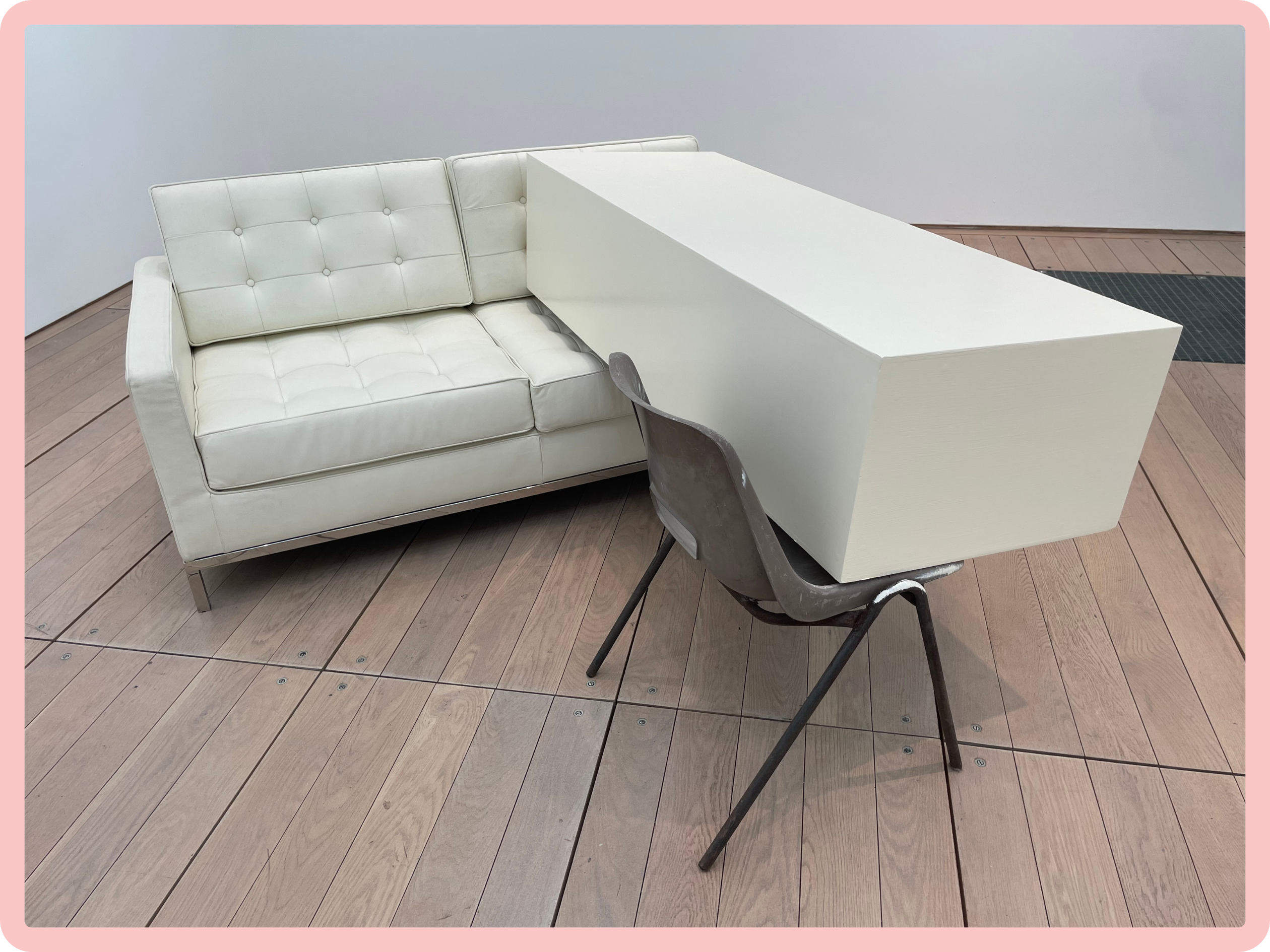
Hungry for daylight, I take the lift to the first floor, entering a bright white room with a high ceiling and a (real) skylight. Immediately I am struck by an installation by Angela de la Cruz, in which a long ivory coloured box connects a leather sofa with a grey institutional chair. The work is titled Transfer, presumably in reference to the process of transferring in or out of a wheelchair. It’s all sharp corners, and there is little of the ‘human’ about it, which perhaps is why I interpret it as a reflection on the undignified ways that disabled bodies are treated in public space (eg. especially during air travel).
Spread across the room’s white walls, I find the work of Jjjjjerome Ellis, an artist I was introduced to last year at Stammering Pride. Ellis’ dreamy photographic series Exposure was created by releasing the shutter of his camera at the moment he stutters.
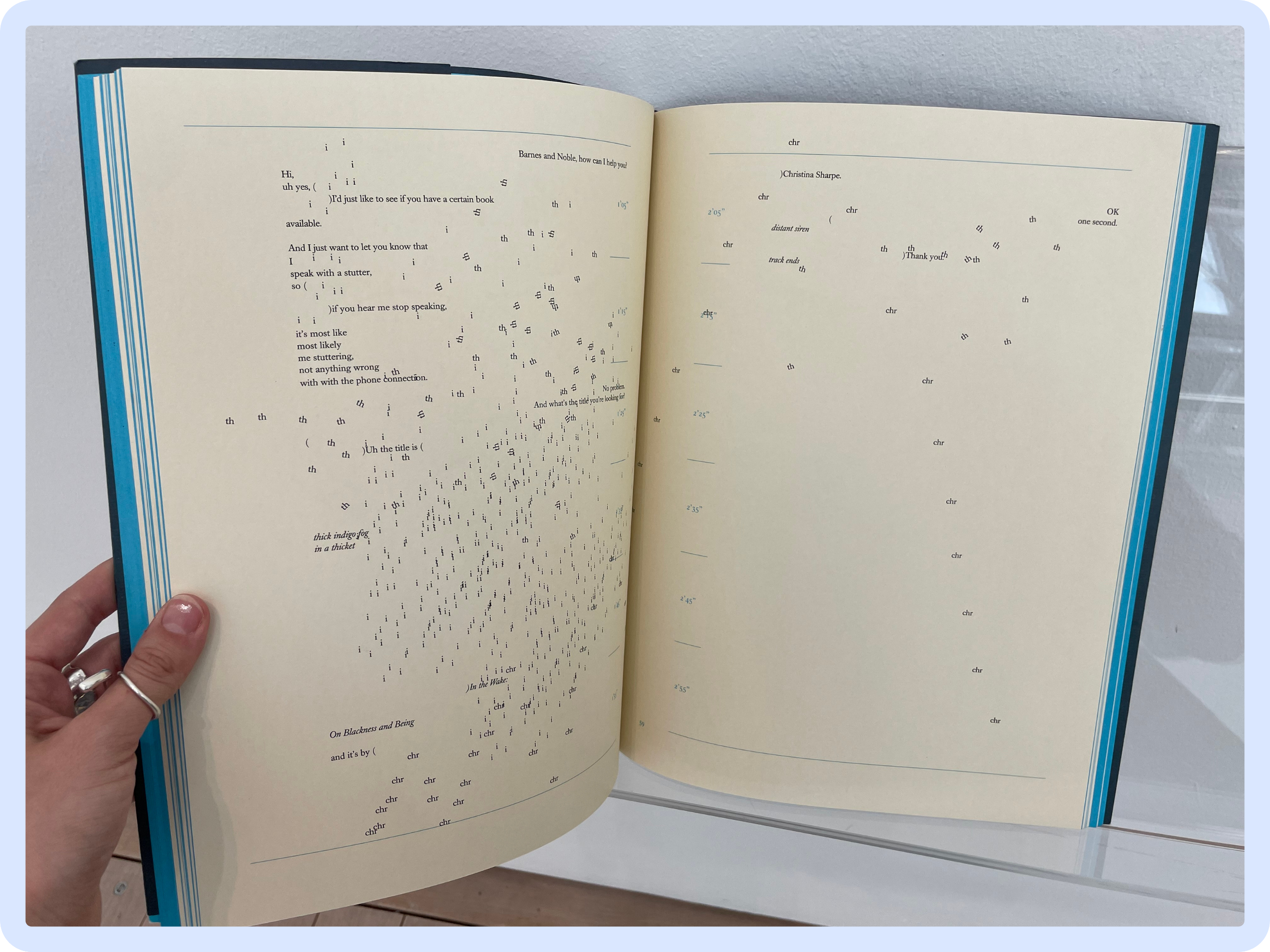
Meanwhile, on a wall nearby, pages are laid out from his 2021 book and album The Clearing. Putting on a headset, I listen to an audio track of Ellis speaking. He explains: “Stuttering creates silent gaps in my speech. I sometimes call these gaps [long pause] clearings.”
I had been introduced to The Clearing by the stammering community, and had described in that essay how “inside the book, the formatting is deliberately disruptive: letters and syllables look like they’re falling off the page, almost as if they got displaced by a gust of wind.”
Though I arrived at the gallery feeling sick, exhausted, and worried that a crash was looming on the horizon, I leave the exhibition having almost completely forgotten that two hours earlier, I was even feeling anxious about my symptoms.
I guess that’s the power of great art: I’ve been distracted from my own internal experience, and transported instead into other people’s embodiments or consciousness.
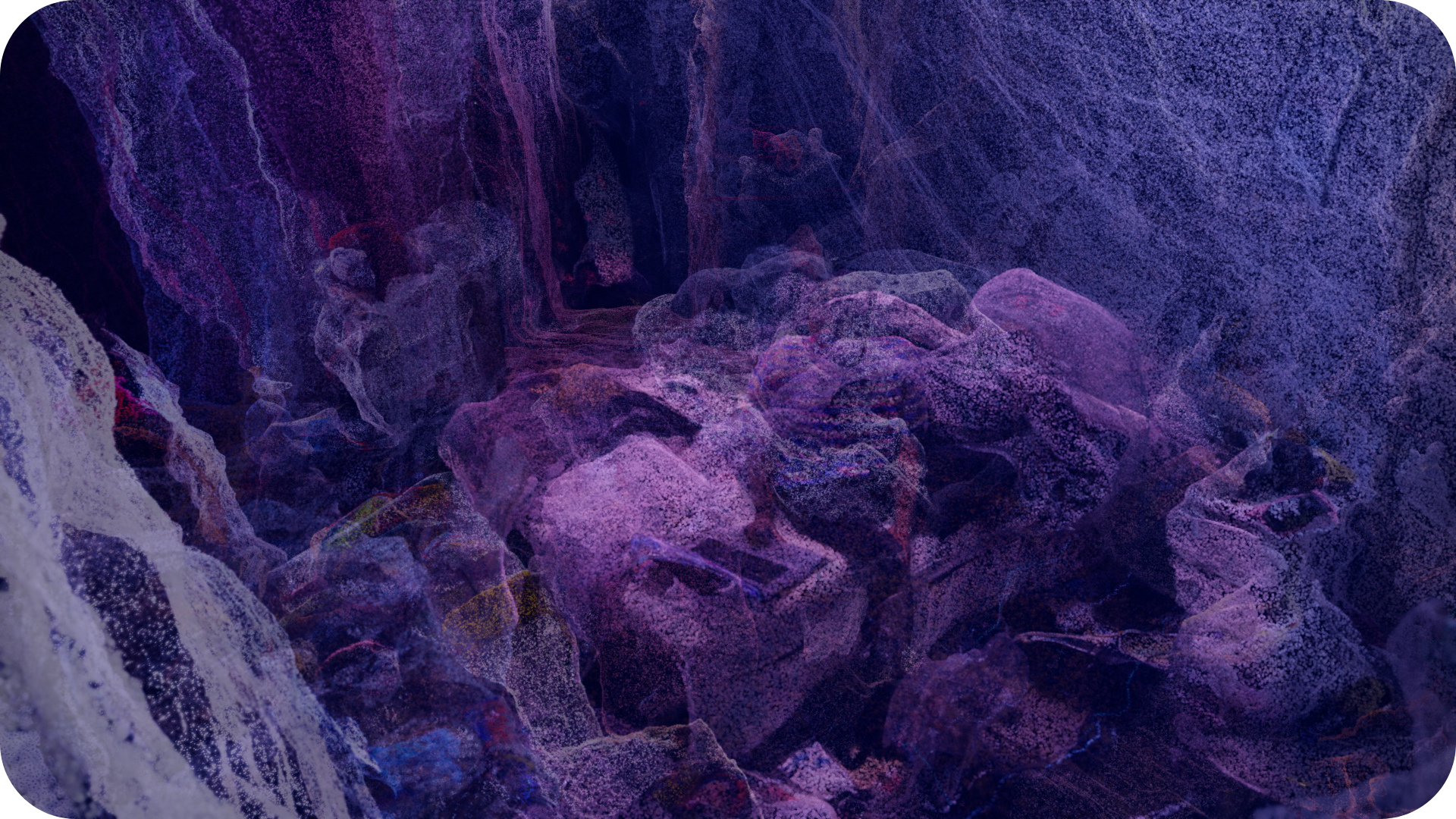
A few weeks later, I’m back at Goldsmiths CCA for a panel conversation called On Crip Art Practices. One of the panellists is artist and filmmaker Jameisha Prescod. They talk about their latest film, a moving image work called I’ll Still Be Here When You Return (which isn’t part of Flare-Up but feels nonetheless like it’s in conversation with the other works).
Jameisha’s film explores their own experience of flare-ups, and reflects on the space between sleep and wake. Jameisha talks about how illness can, paradoxically, be creatively generative. They describe the “potential of the in between space” and describe in their film how in a fatigue episode during a flare-up, it sometimes “feels like anything is possible.”
I’m really excited to have been commissioned by FVU to write a text in response to Jameisha’s film. In Between is a short piece of memoir about my own journey of illness, recovery, intimacy and relapse. I write about what it was like to re-enter the world (travelling, dating, and living independently in Paris!) after years of being housebound. It was fun to write something so different –and more experimental– than these newsletters.
I’ll leave you with some words from my piece:
It feels strange that it’s only because of illness that we even met at all. It feels strange, and miraculous, that through art we can reach each other.
You can read my piece online or, if you happen to be in Bristol, you can pick up a physical copy at Arnolfini while it’s on exhibition there alongside Jameisha’s film until 30th August. And you can catch Flare-Up at Goldsmiths CCA until it closes on 16th August.
I hope we read or reach other soon,
Celestine x
Thank you…
Thank you Jameisha Prescod, FVU, and Arnolfini Arts for the commission of In Between. Thank you Naomi Chapman for essential editing of this essay. Thank you Goldsmiths CCA for allowing me to take photos of the artworks at Flare-Up.
Shoutout also to my three paid subscribers who are very literally enabling me to keep this work going. To the latest, Betsy, thank you.
Would love to see this, but thank you so much for sharing with us, as I probably won’t get there (chronic illness and all that!)