


Dear every body,
I hope you’ve had a good summer!
I took some time off last month and for the first time in my adult life, switched my phone off for an entire week (although I did write another essay in that time!). I went to Italy, where it was swelteringly hot and I spent most of my time horizontal and in front of the fan, or on the beach with a crema al caffé. My beach read was (maybe unsurprisingly) a four-hundred page hardback about disability history. Its sandy pages, warped by salt water, tell the tale of how much I enjoyed it…
In today’s newsletter, I’m honoured to be sharing a conversation with Professor David Turner, one of the UK’s leading disability historians. He’s a professor at Swansea University and has published extensively, particularly on disability in Eighteenth-Century England, and on disabled people during the Industrial Revolution.
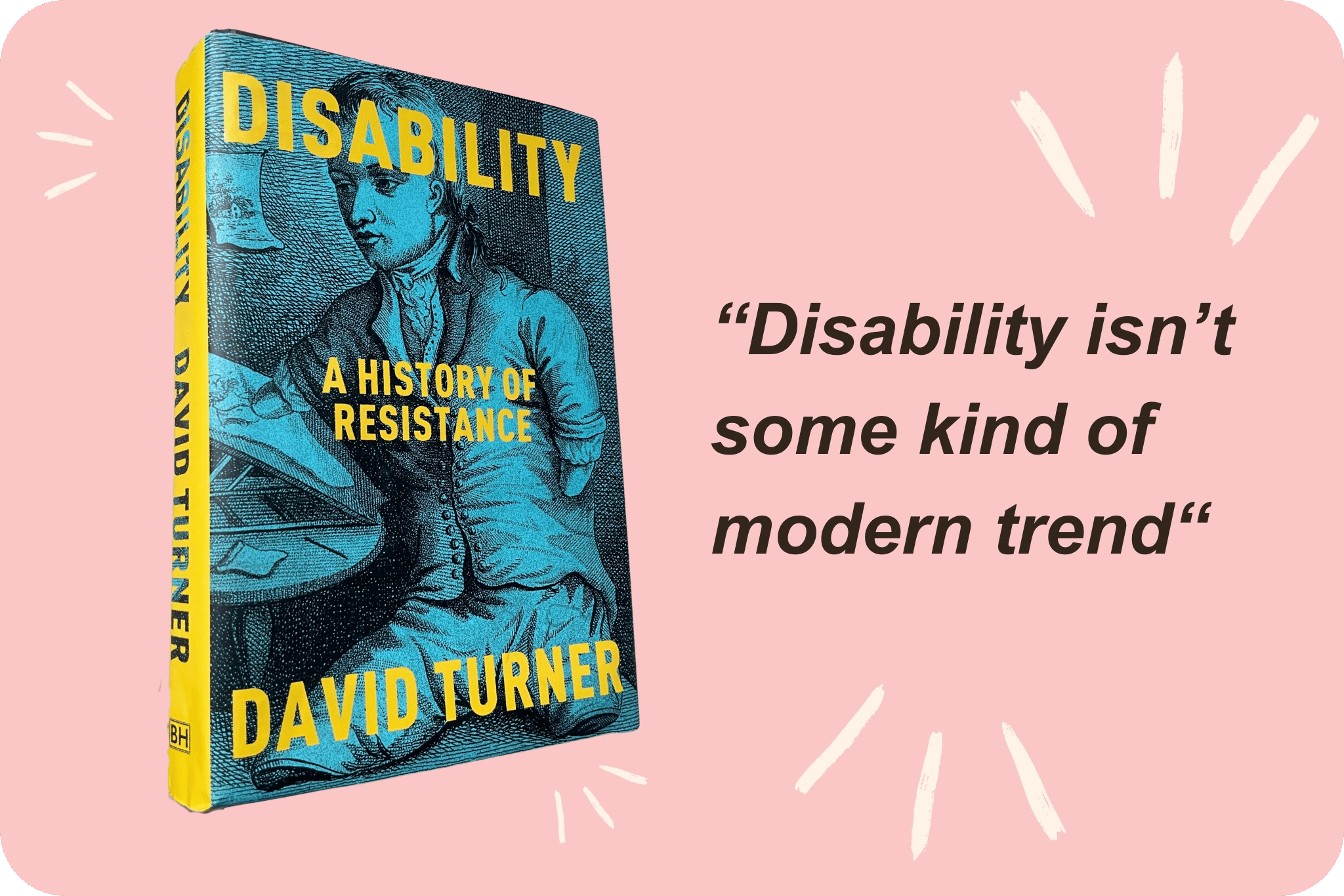
Most recently, he published Disability: A History of Resistance. Published by Bodley Head/ Penguin, the book is an epic and gripping history of disabled people in Britain over the last five hundred years, and has been critically acclaimed.
As a slew of ableist and misogynistic articles have been published in the UK in recent weeks, dangerously portraying mobility aids as a fashion accessory and disability as a modern trend, Turner’s writing feels especially urgent. His book’s central argument is that disabled people have always existed, and that even before a 20th century disability movement, our community has continually resisted and fought for our rights.
I’ll hand over to Professor David Turner to explain…

In this edition of Body Babble, we’ll cover:
Popular misconceptions about disability history
How has the language of disability changed over time?
The social model as a turning point
The long history of accusing disabled people of “faking it”
What led you to write this book?
DT: One of the inspirations was talking to my friends in the disability movement who were complaining that the resources they had were often quite inaccessible because they were written in an academic way.
So the idea was to try and bring all this knowledge and interest to a wider audience, and to rethink the way we approach disability rights and disabled people’s activism as something which is traceable a lot earlier in time than we often think.
There’s such a long disability history and I started five hundred years ago, but I could have started even earlier.
Why do you think disability is so often siloed or considered “niche” as a topic?
DT: I think it’s several things. There’s an assumption that disabled people have never done anything, or that everything that’s happened around disability has been about care or welfare – things being done to or for disabled people rather than disabled people doing anything themselves.
I think there’s also a myth that disability is somehow hidden in history. But there’s actually disability everywhere once you start reading things from the past. I don’t like the term hidden history very much because in reality, I think it’s more a suppressed history or a forgotten history – something which actually reflects deliberate choices about whose histories matter, rather than something that’s hidden in obscurity or archived somewhere that requires specialist skills to find it.
Another thing is to do with difficulties disabled people have in being able to access history, whether that’s through being able to access archives, lack of representation in academia, or in publishing more generally. That has held back the study of disability.
What are common misconceptions about disability history?
DT: One misconception I find a lot with my students is that people in the past didn’t understand disability, or that we now have a proper understanding of what disability is, and of disabled people’s lives.
Firstly, I think it’s an unduly optimistic view of the present, but it’s also a really limited view of the past, because people living five hundred years ago would have been all too aware of disability. They would have seen disabled people in their day-to-day lives.
They may have been more likely to live with some kind of impairment because of things you take for granted in medicine today. If you break an arm or a leg, most people don’t assume that this will lead to permanent disability unless it’s a really complex fracture. We expect these things to cause temporary incapacity and then get better. But in the past fractures mostly wouldn’t heal properly and so would’ve left some kind of lasting functional impairment.
People had very different ideas about disability, but it doesn’t mean that they didn’t understand it.
So in the past, were there a lot more disabled people?
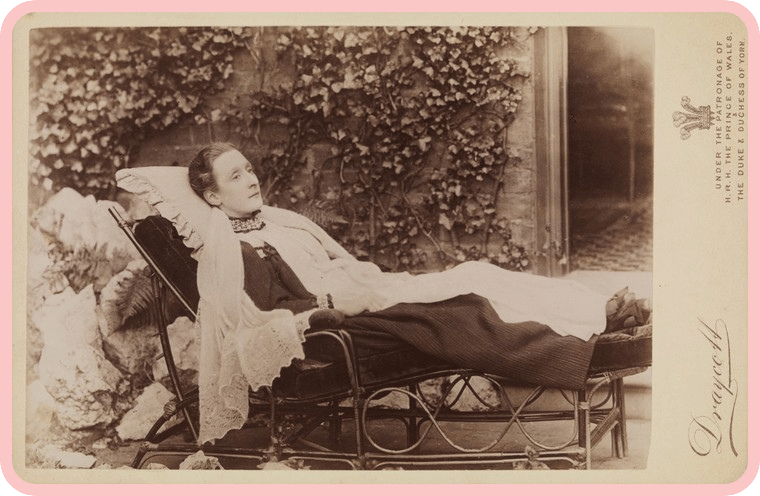
DT: I think we have to be a little bit careful in that it’s only recently that we’ve got to count how many disabled people there are, and that also raises questions about what is disability. So we can’t say for sure that there were more disabled people in the past than today, where we have nearly 17 million disabled people in Britain.
But there are moments in history where people are talking about being very struck by the number of disabled people they see. Disability was not some unknown thing or hidden away, it was part of mainstream society.
You write that to research your book, you had to look beyond sources that used the word disabled, because that’s actually quite a modern word.
DT: Yes, that’s always a big problem. The word disability, in the way we understand it today, is not very widely used before the 20th century.
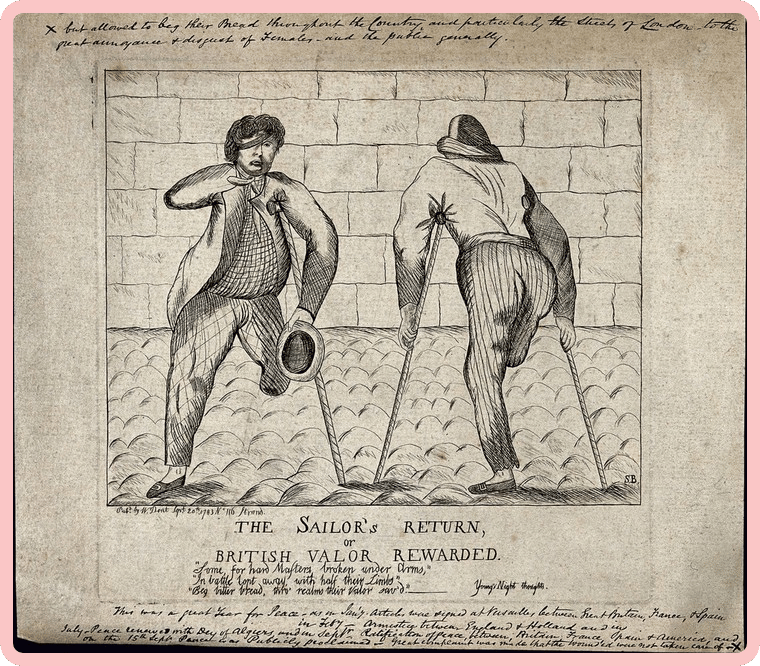
The word disabled was used in previous times, but often in quite specific ways. The first time you see the word being used in law is in relation to pensions for disabled soldiers and sailors. So that associates being disabled with a certain kind of experience: a very masculine experience, often an honorific experience of service. And so it meant that other people with impairments might be excluded from the category of disabled by nature of their social status or gender or other factors.
By the time we get to the 19th century, the term disabled is used more widely in terms of inability to do paid work. So industrialisation has a big role to play in terms of defining people in terms of their earning capabilities. But even so, people with physical sensory and intellectual impairments continue to work through this time.
And then the First World War is another key moment in shaping modern ideas around disability, particularly as a category of state welfare. So disability is a historical concept in the sense that it emerges at a particular time and place.
Is it fair to call people from the past disabled?
DT: One ethical dilemma we face is how do we talk about people in the past who wouldn't have used that term to describe themselves?
I think we have to be respectful of the fact that not all disabled people in history would have identified as 'disabled' as we understand it, but at the same time we can't fully avoid using our own definitions of disability when talking about the past.
In academic writing we often put modern terms we’re using out of context in quotation marks. But I decided not to do that when I talk about disabled people in the past because it implies that they weren’t really disabled.
So that’s something I had to grapple with. I wanted to convey that the term has changed over time whilst at the same time writing about people whose experiences would resonate with our own understanding of disability today.
How has language around disability changed over time?
DT: I think this is the other side of the ethical dilemma around language: what do we do with the really problematic language that’s in so many historical descriptions of disabled people?
I’ve seen some writing completely avoid engaging with that language altogether, on the grounds that it is so problematic now that even quoting something causes harm. And I can see the argument for that.
But at the same time, I think these are words which disabled people in the past used to talk about their own experiences. For example, in the book I talk about William Dodd, who campaigned for factory reform in the 19th century, particularly around getting better compensation for people who were injured or disabled through their work. He refers to himself as the “factory cripple”, and that was a very deliberate choice to show that he came from that world and that he had an affinity with people in that situation.
Obviously the c-word is really problematic today and it’s not something we should be using in our modern discussion of disability. But it was a very powerful word for that particular person in that particular context.
How did the social model lead to a modern disability movement?
DT: A more radical disability movement emerged in Britain and elsewhere in the 1970s, with a crossing of ideas from different radical political movements, like the South African anti-apartheid movement. The social model is named and comes together in the 1980s, but it has deep historical roots as well.
We start to think about disability in terms of social barriers and that somebody’s disabled by the society they live in. It’s really interesting to find some early examples of that back in the Victorian era. There were some blind political activists in the middle of the 19th century who recognised that blind people’s position in society was very influenced by the fact that so much of Victorian society was built for people who were sighted.
But I think the social model’s real importance was allowing disabled people with different impairments to come together in a common cause. It really enabled the modern focus on disability rights to emerge. It was a call to action politically to try and dismantle some of these harmful attitudes and barriers.
The social model isn’t perfect by any means. It’s been criticised for ignoring the experience of impairments and that’s fair enough, I think. But at the same time, without the social model, we wouldn’t have things like the 1995 Disability Discrimination Act.
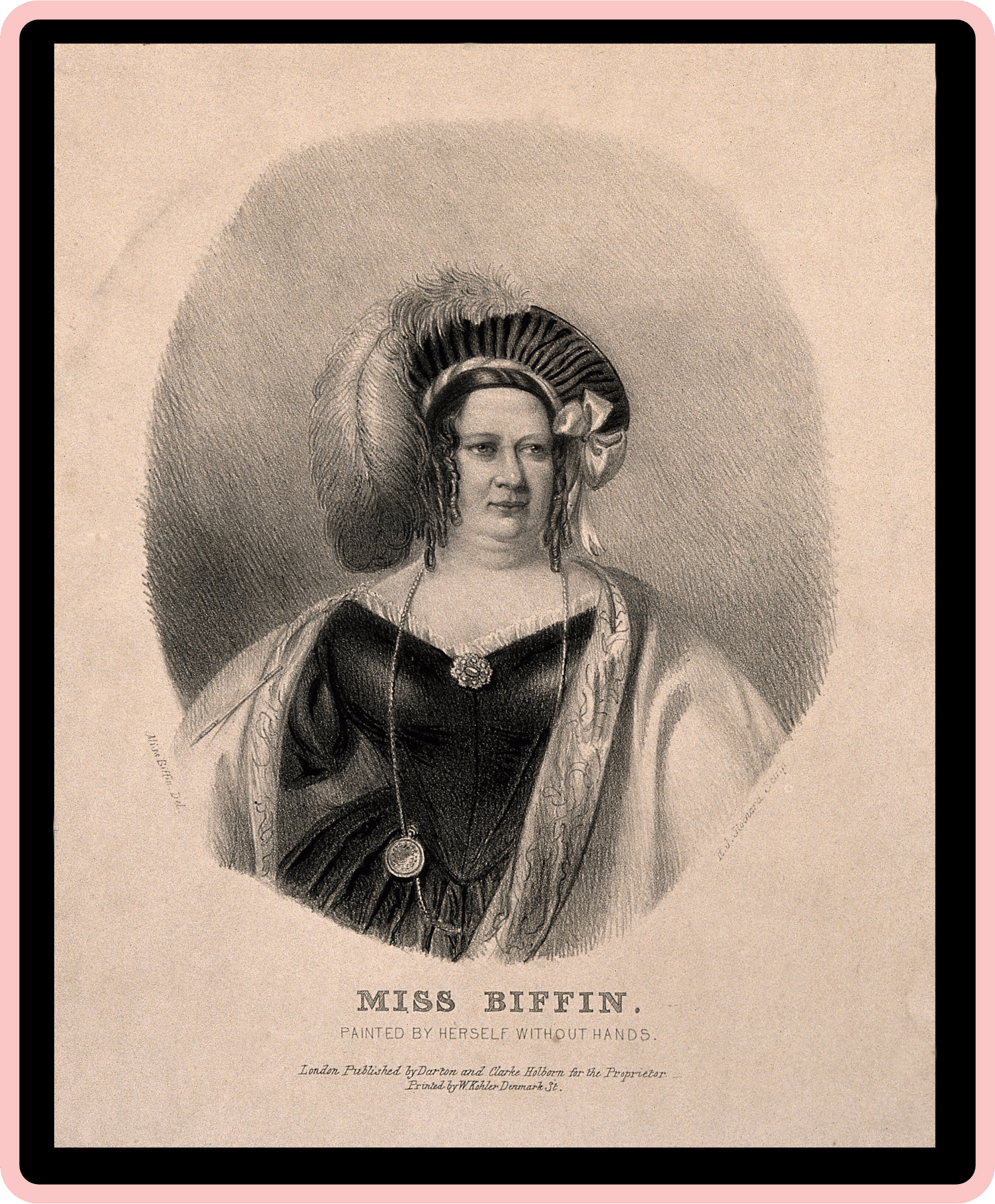
In the last couple of decades in Britain, I’ve been aware of a pervasive media phenomenon around the idea of disabled people “faking it.” When did this culture of suspicion start?
DT: Unfortunately, it does have a very long history. It starts to come to prominence around the end of the 16th Century, which is a time when we’re moving towards the first system of state welfare in England and Wales, under the Poor Law. People are recognising the need for communities to have some kind of system of financial support to help people who aren’t able to support themselves, and at the same time this nasty stereotyping of “fake” beggars starts to emerge. Disabled people are really prominent in this discussion of “faking.”
At the end of this period, you see these “guidebooks” for visitors to London, which don’t give you the sites, but are all about how to interpret people you might meet on the street. They show multiple types of disabled beggar, with bizarre names like clapperdudgeons and Abraham-men. There’s a whole literary genre about “fake” disability.
But it is not just about people just reading this stuff and being entertained by it, it seems to filter into people’s attitudes. In late 16th century London, there’s a rise in people being arrested for faking disability in relation to vagrancy, and they’re imprisoned or publicly humiliated. You find people in the provinces reflecting these attitudes, voicing their suspicion about people in their community. And it also affects disabled people who are trying to get support.
People who feel they have a genuine case for getting some support from their community are denied that support because their neighbours accuse them of faking their impairments. This is the thing about the faking disability theme: it impacts on all disabled people potentially because it creates this climate of suspicion.
Why do we need to be learning about disability history today?
DT: I think we are in a moment where there are so many harmful portrayals of disabled people in the media, all of which have history. And I think we need something to counter that.
Including disabled people in the story of Britain, which is what the book grandly tries to do, is about showing that disabled people are always there and that disability isn’t some kind of modern trend, which you see in some media portrayals of neurodivergence, or for example that notorious article about a month ago about “Why are so many young women are using walking sticks?” as if people are just seeing this on TikTok and deciding they’re disabled. That’s just rubbish.
Disabled people have always existed, have always been part of history and have always had to fight for everything they’ve got. Disability rights aren’t just the product of our society becoming more enlightened or more understanding of disability, but because disabled people actually fought for those rights and highlighted discrimination.
Some of the most shocking stuff I’ve found in researching this book is not the stuff from the 16th century (harrowing as some of that is), but stuff from the 1980s. I read a newspaper account of a group of learning disabled people who were thrown out of the pub because they were “spoiling” the ambiance, and that’s just horrible and for me, within living memory.
So it’s really, really important to know this stuff. The more we know, the more we can push back against the really difficult things which disabled people are facing today.
Buy Disability: A History of Resistance
Follow Professor David Turner on LinkedIn
Thank you…
A huge thank you to Professor David Turner for writing such an essential book, and for sharing this conversation with me and my readers.
Thank you to Theodore Fraser for essential editing.