


Dear every body,
At the end of last year, I received a lovely message on LinkedIn from a Deaf writer in the U.S, who introduced herself as Carolyn Girard. She told me she’d recently discovered Body Babble and would be keen to write an essay about her experience at Gallaudet University, the world’s only Deaf university.
Immediately I was intrigued. I’d been aware of Gallaudet for a number of years; I’d read about the university in Oliver Sacks’ Hearing Voices and in Carol Padden and Tom Humphries’ Inside Deaf Culture, and I’d watched the Netflix reality show Deaf U and the 2025 documentary Deaf President Now! But as a Brit and a hearing person, I’d never actually met anyone who studied there.
So after months of collaboration and Zoom calls, I’m excited to hand over to Carolyn, who is my first guest writer, with this brilliant essay about her years at Gallaudet. Please join me in welcoming Carolyn to Body Babble!
Body Babble is free to read, for everyone.
Independently publishing original disabled stories on absolutely no budget is a labour of love. Please help me continue this work by:
subscribing
sharing this essay with someone else
considering a paid subscription
Thank you so much!
Celestine x

In this edition of Body Babble, we’ll cover:
Carolyn’s experience growing up Deaf
Transferring to Gallaudet University
Learning ASL and discovering DeafSpace
The thriving Deaf scene in Washington D.C
Surviving a sexual assault on campus
Content warning: Please be aware that this essay includes discussion of sexual assault, being a survivor and suicidal ideation.
A hearing world
They found out I was Deaf at five months old. Growing up, I don’t remember a time when I didn’t wear hearing aids. My grandma told me I’d hide them under the couch as a toddler. But I don’t remember at what point I realized they were crucial to me understanding the world around me.
My nose was usually in a book, and if I wasn’t reading I was playing the piano or on my Gameboy Advance. Those things didn’t require me to work so hard to understand other people’s speech.
In the hearing world, and by the standards of oralism, I was a poster child for success. I played competitive piano, danced, got mostly A’s in school, spoke with a clear voice, and had a few friends.
But what teachers and people around me didn’t realize was that it never felt like I was fully there. Even with hearing aids, whatever memories I had of myself and others were only pieces or fragments of the whole picture. I was in my own bubble.
Finding the Deaf community
At the age of seventeen, I spent two years at a community college in Michigan studying American Sign Language interpretation. But when the program I was supposed to graduate from suddenly shut down, I was left with wasted credits. I was given two options: start over at a new four year university in-state (even though it likely wouldn’t have an ASL program), or transfer to Gallaudet University, a Deaf university in Washington DC.
“You need to find the Deaf community,” said my American Sign Language (ASL) professor, a Deaf man who had been my trusted mentor for two years.
He was right: I’d been deprived of Deaf culture, and ASL classes weren’t enough to fill that hole. Heeding my professor’s advice, I packed up my disappointment and transferred to the world’s only Deaf university.
No other place like this in the world
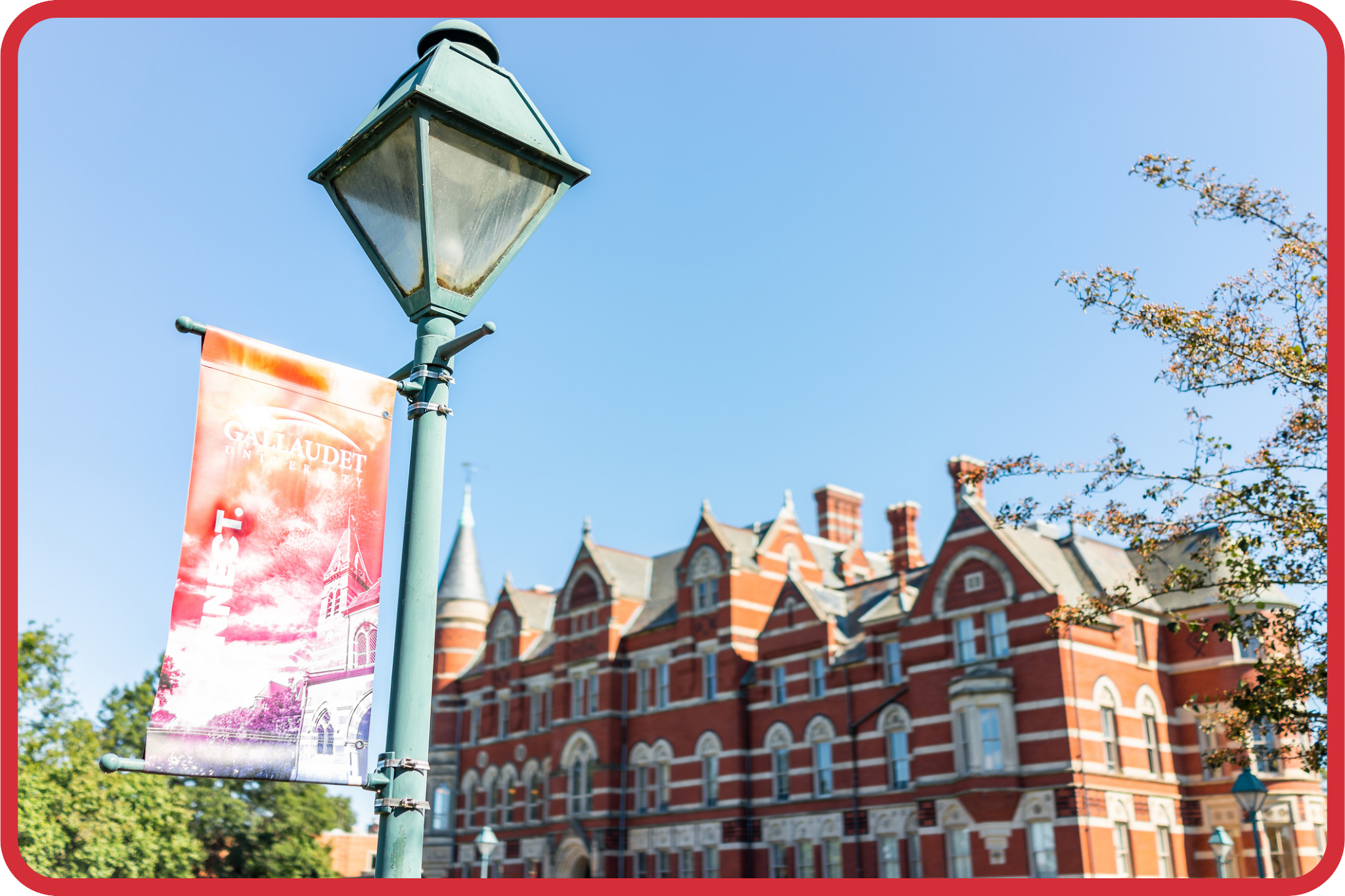
When I arrived at night in a taxi, the first thing I saw was a huge slogan which read “There’s no other place like this in the world.” The driver dropped me off and left me to wander until campus police found me, lost with my suitcase.
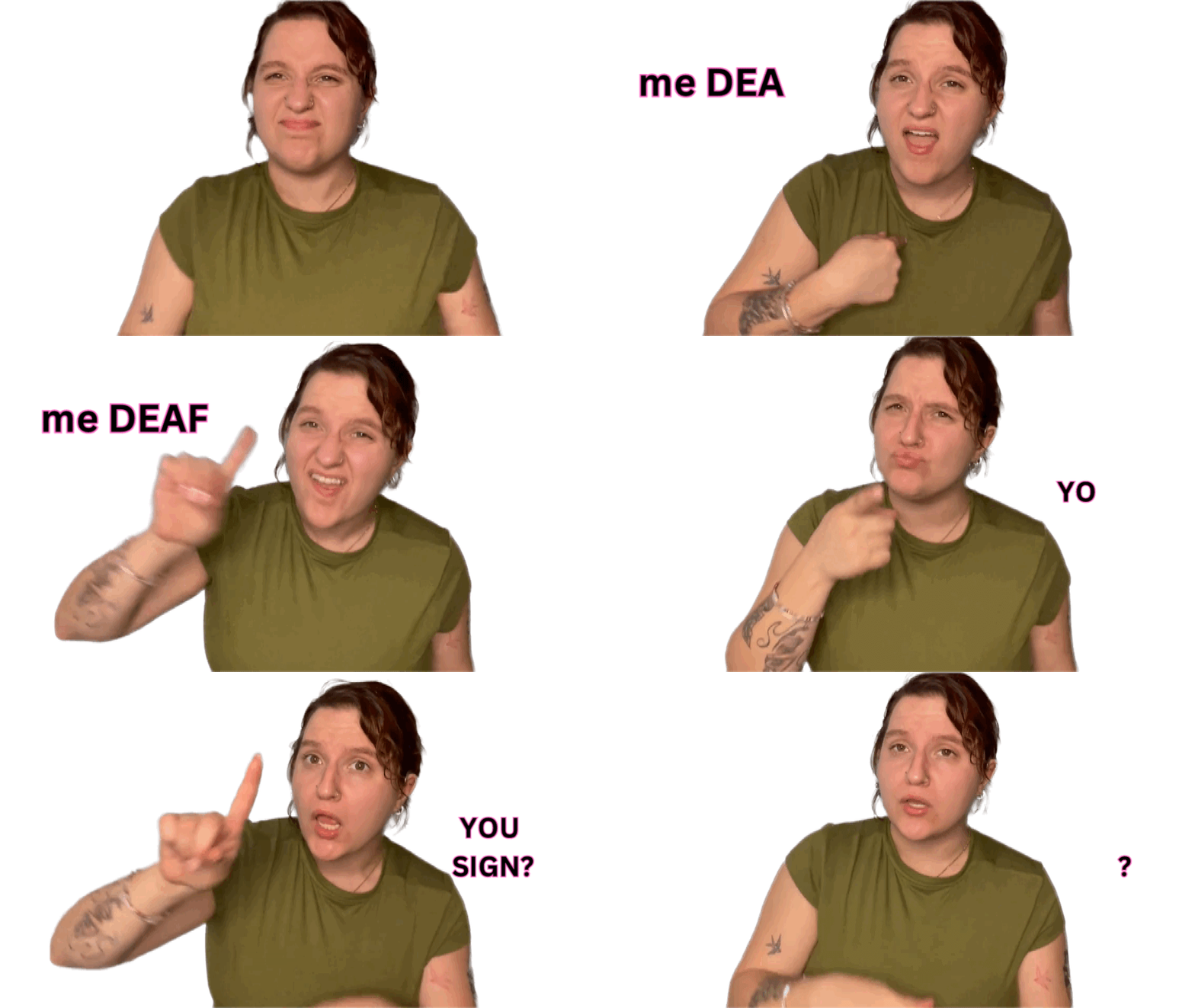
“I DEAF”, I signed clumsily to the officer, “J-U-M-P-S-T-A-R-T?”. He smiled and lead me to my dorm. I had arrived at Gallaudet before the beginning of term for JumpStart, an intensive summer school. I would spend the month of July learning ASL and Deaf culture and history, while touring Washington D.C with a group of people like me – mainstreamed Deaf and hard-of-hearing individuals who had been discovered by Gallaudet recruiters across the country.
Deaf ASL professors and college peer mentors opened our eyes to the Deaf world. We attended ASL classes from 9am to 5pm, ate together for dinner and spent our evenings running rampant on the empty campus or finding the cheapest dumplings on H street at night.
By the end of the summer, our group of twenty-five freshly transplanted Deaf students were all signing full conversations to each other, excited for the semester ahead.
Accessibility was standard
At the beginning of the Fall semester, the campus became alive with activity. Students and families carted their entire lives into the dorms. Classes started and we realised something significant: there were ASL interpreters everywhere on campus. CART live captions and subtitles were on every screen.
The campus was built according to the architectural principle of DeafSpace: buildings were brightly lit, with hallways wide enough for wheelchairs and for groups of people to sign with ease. Glass elevators, walls and open concepts provided easy visual access for signing.
Conversations were led with patience. People didn’t get annoyed by sounds of chewing or breathing (“Your breathing is so loud”), or having to repeat themselves. Accessibility was a standard, not a burden.
I realised that the life that I had been living in the hearing world was that of a ghost.
The planet was at our fingertips
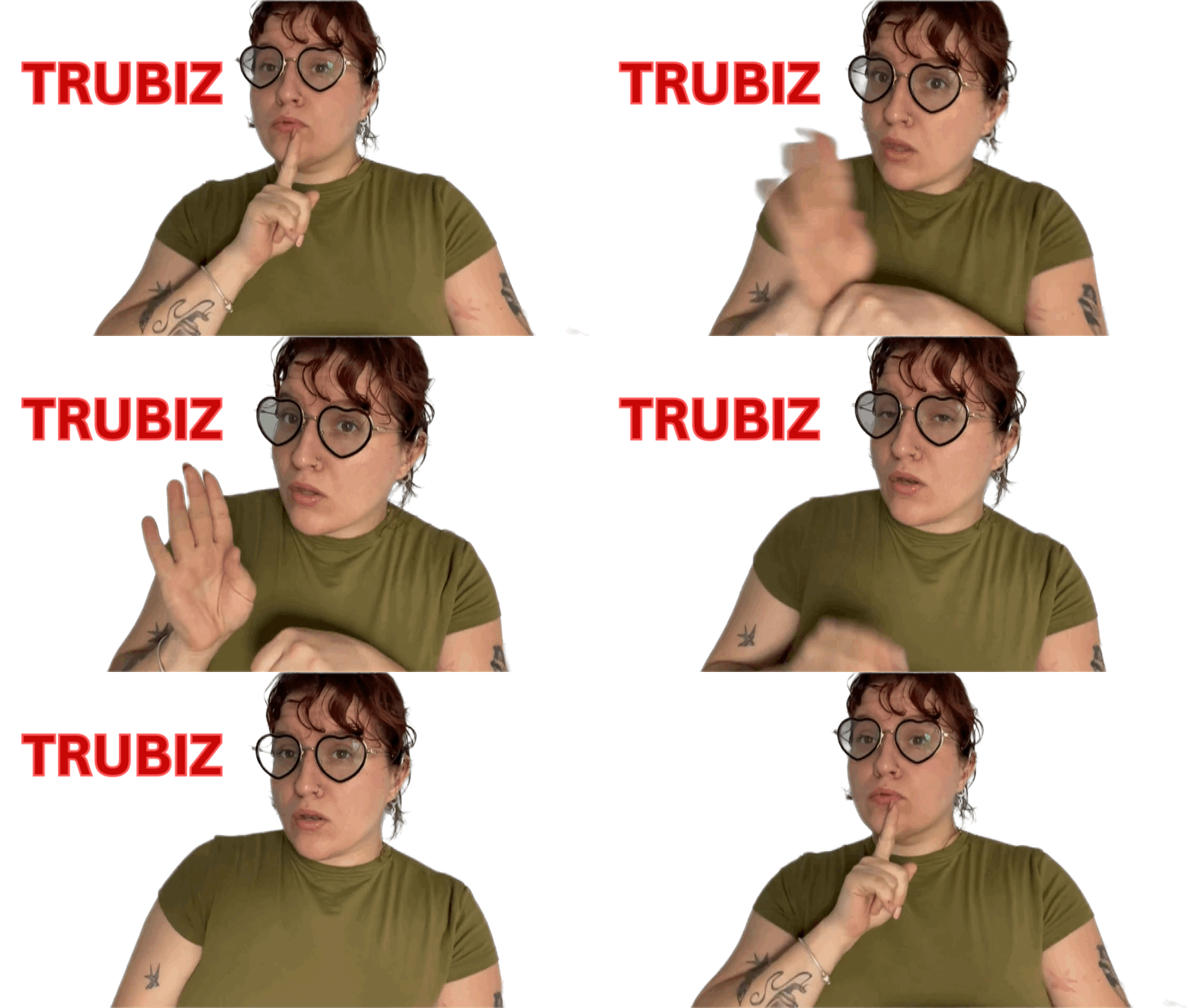
At Gallaudet, I met Deaf, DeafBlind, neurodivergent and disabled people from around the world. I learned about the 300+ global sign languages. I became friends with exchange students who taught me Japanese Sign, Palestinian Sign and Mexican Sign, and I even learnt versions of Native American Sign (Hand Talk). The most interesting people in the world were on campus. The planet was at our fingertips.
The Deaf world is small yet huge. Our community has its own celebrities, actors, linguists, artists, lawyers, medics and political leaders. I met people with life experiences that should be in books – like the DeafBlind woman who has a masters in social work and could recall what life felt like before she had access to language.
Many of my professors were revered across the country for their expertise. For example, Carolyn McCaskill, who graduated from the first integrated Deaf school in Alabama in 1968 and wrote groundbreaking work about American Deaf history. People the hearing world would overlook on the street were legends in the Deaf community.
The parties are CHAMP!
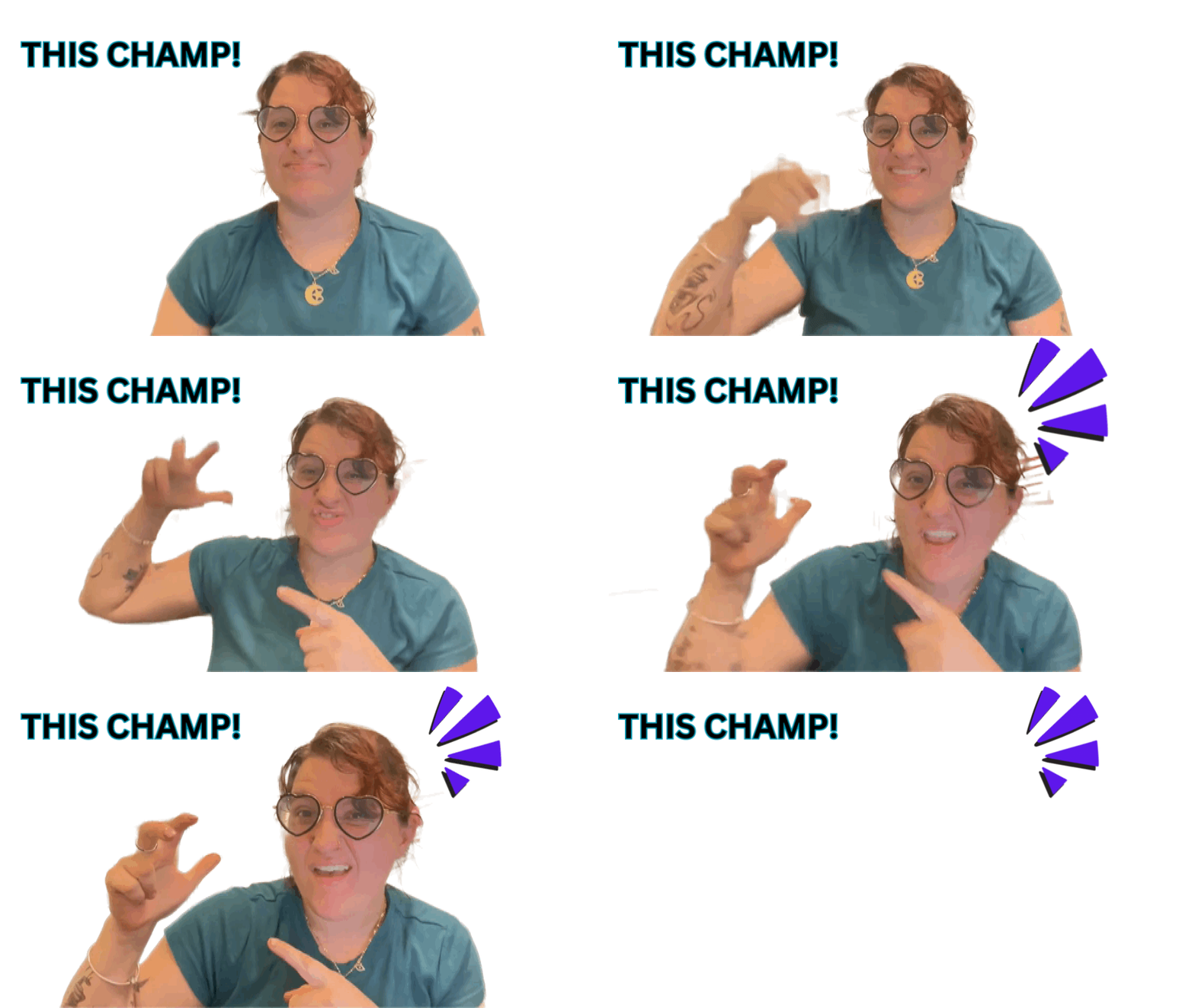
The parties at Gallaudet were filthy and wild. Each weekend, our Snapchat and Instagram feeds flooded with party locations on and off campus. Packs of students prowled the campus in skimpy crop tops and short skirts, and topless boys on skateboards with huge stereos patrolled from building to building for open dorm rooms. Deaf people like to feel and hear their music, so booming music would resonate across campus. Luckily, noise complaints are not a concern at this university.
Dorm rooms were packed with bodies spilling alcohol, making out in corners and at times visibly freaking it on where they thought they weren’t seen. If you wanted something harder than alcohol or weed, lean, shrooms and Adderall were always available by delivery if you knew the right people.
Every weekend was like this, and even some weekdays. If you’ve spent 20 years of your life in isolation then you go to college and all of a sudden, you have all these people who are the same age as you and you can understand everyone (and there’s lots of alcohol and drugs), you’re going to party and it’s going to be intense.
City of opportunities
Gallaudet is located in Washington D.C., so the capital is moulded by the Deaf community’s presence. We could go out in public and not be stared at like zoo animals, because the hearing people in D.C. are used to having Deaf people around. The city is full of talented Deaf professionals, and home to Deaf coffee shops, theatre companies, and dance workshops. It was even easy to get Deaf roommates off-campus.
A short walk from campus was the Signing Starbucks on H Street, a Deaf coffee shop that took your order in sign language. Even hearing people had to write on pen and paper or attempt to sign their orders. It was a role reversal that made hearing people nervous but excited, as well as a unique business prospect that enticed the city.
Another Deaf business on H Street was MOZZERIA, a pizzeria where the Gallaudet community would go to celebrate graduations or anniversaries, or to get their first job as a waiter or cook in an accessible environment where they didn’t have to fear getting fired for being deaf.
In Washington D.C., I had more opportunities. Life seemed brighter.
A dark turn
Unfortunately, in my very first semester at Gallaudet, my university experience took a dark turn. I was assaulted in my own dorm by my roommate’s friend while she was gone one weekend. The next day I showed up to class with black bruises on my neck, and I later reported my assault to Title IX (the department that handles university abuse cases) with support from a mandated reporter (my professor). What followed were years of struggle.
I faced scrutiny and judgment from peers who assumed me attention-seeking, and I felt the administration did a poor job at caring for their Title IX survivors. Each semester I would brace myself for the school to send me an eviction letter over my low GPA, where I would repeatedly have to re-open my rape case. I had stacks of papers and letters from professors, therapists, and Title IX advisors to plead with administrators for understanding.
Despite my pleas, I lost my scholarships, Pell Grants, was kicked out of my program, denied internships, work studies, or study abroad opportunities. My low GPA – which I believe was the result of rape – was the only evidence Gallaudet wanted to see.
I developed PTSD, which worsened my undiagnosed ADHD. I thought I had developed some fucked-up form of early Alzheimer’s. I drowned myself in a haze of weed to numb myself to suicidal temptations.
Deaf and disabled
While Gallaudet is very accessible for people who are “just” Deaf, I didn’t feel this accessibility always extended to students with other disabilities – a community known as Deaf+. These were students who were at the bottom of the status quo.
Deaf+ refers to students who are deaf with additional disabilities, or who need other accommodations. For example, wheelchair-users, people who are DeafBlind, Low Vision, neurodivergent or have other medical concerns (like Usher Syndrome) that may have been the cause of their deafness.
Students who needed accommodations – like online class options or extended time for those who frequently needed surgeries – were frequently denied them. Emergency protocols and equipment including stretchers for the DeafBlind and wheelchair-users were inadequate.
Vidism (discrimination against blind people) was rampant.
Blind students had difficulty getting voice interpreters, and coursework was assigned in formats that were inaccessible to screen-readers, leaving many DeafBlind students reliant on sighted friends, tutors or Sighted Support Persons (or SSPs) to help them with homework they should’ve been able to access themselves.
Plans to organise protests were short-lived because students feared repercussions. I remember speculation that “we would be responsible for losing the only Deaf university we have” if we made our concerns known to the public.
In my own rage and desperation, I worked with friends to start the Disabled Students’ Union page on Instagram. I posted anonymous complaints from students, staff and interpreters.
A small but mighty movement, we scared and embarrassed the administration into doing their jobs. Broken doors were fixed, braille labels were added to public spaces, and the disability office began to include disabled students on their board. A tiny step in the right direction gave students a semblance of their voice back.
The only time you feel human
I fought for my degree up until the very last second. Exhausted and left without much dignity, I wanted nothing to do with Gallaudet by the time of my graduation. But as I went back to the hearing world, reality slapped me in the face.
Isolation left me depressed and two years of unemployment made me sick with anxiety. All my Deaf friends moved back to their home states and countries and suddenly, like a spell or maybe a curse, the words “no other place like this in the world” rang in my ears louder than ever.
You can leave Gallaudet, but it will never leave you. I’ll always have an ache for the world that showed me that my quality of life could be better – even if I came out of it severely traumatised.
So when other Deaf people ask me if they should go to Gallaudet, I’m always unsure what to say, except that they’ll be changed forever. My advice would be: advocate for yourself, know what you’re getting into, and be fierce about your own student rights. But most of all, have fun, because those four years might be the only time you feel completely human.
There’s no other place like this in the world.
Buckle up,
– Carolyn
Gallaudet University was approached for comment.
Thank you from Carolyn…
Thank you to Celestine Fraser for taking a chance on a complete stranger halfway across the planet, and for highlighting the stories that you feature in Body Babble. Thank you to friends who body doubled on Zoom to help me out of a deep writer’s block. Thank you readers for taking the time to appreciate the work of disabled artists and writers. Much love!
And a thank you from Celestine…
Thank you Carolyn for reaching out and writing this amazing essay! Thank you also to Ruby Lott-La Vigna, Peter Torres Fremlin, Melissa Pawson and Constantine Fraser for advice, and Theodore Fraser for help with editing.
