


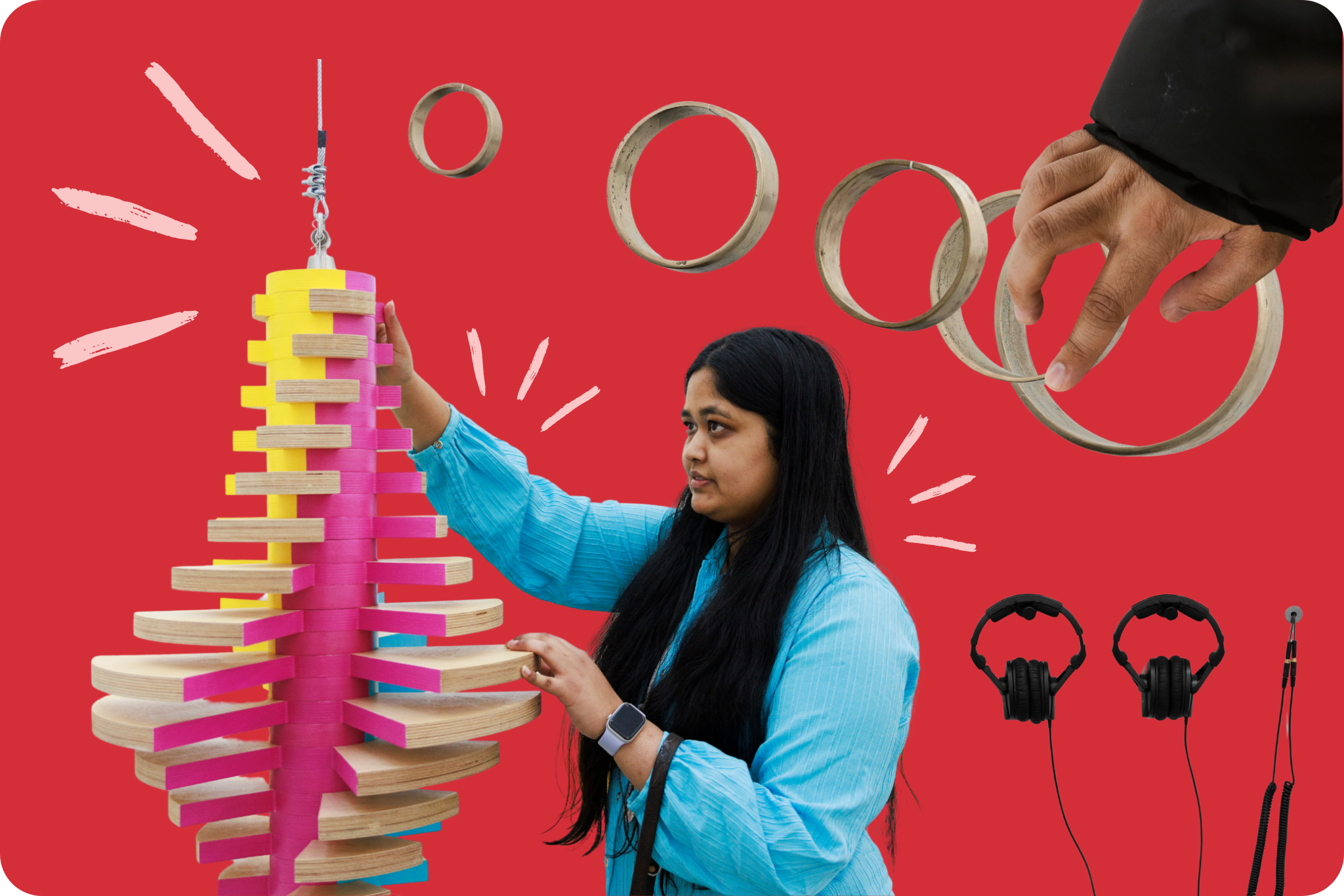
Dear every body, today we’re talking about Beyond the Visual, the UK’s first major blind-led sculpture exhibition, which is running until 19th April 2026 at the Henry Moore Institute in Leeds. I visited the exhibition on their press day in November and though my visit was only brief, it shifted how I think about art and the senses.
Like most sighted people, the visual is my “dominant” sense. It’s with my sight that I read, watch films and TV, and explore galleries and museums. It’s with my sight, really, that I make sense of the world.
But in recent years my visual bias has been happily unsettled by my friendship with Maud Mokren. Maud is a writer and artist, and she happens to be blind. Through our conversations, her gorgeous writing, and our time together in the world, I’m repeatedly reminded that so much of the beauty in being alive is found not in the visual, but in all our other senses.
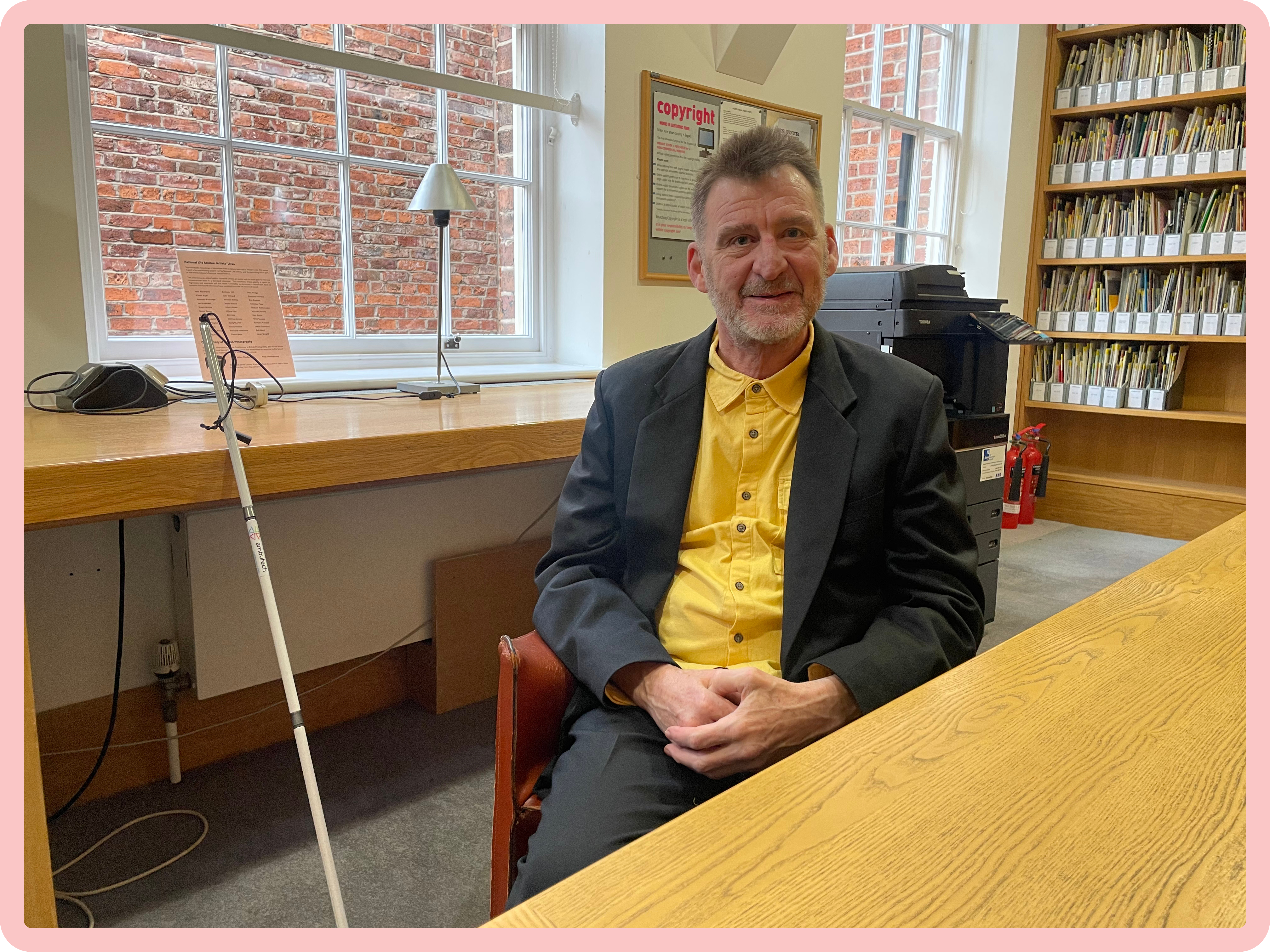
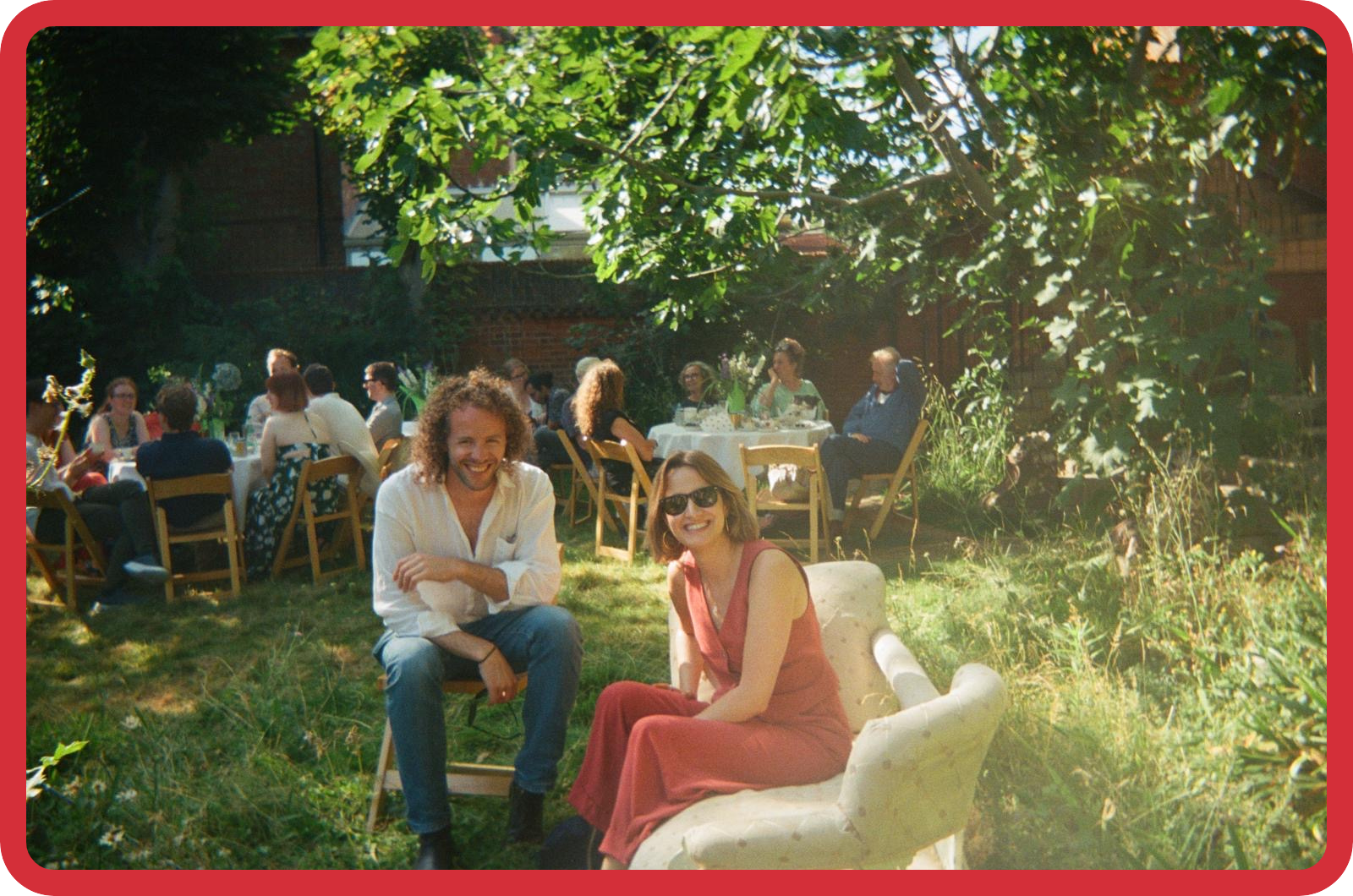
Last year, Maud got married, and I spent one hot Saturday in June at her engagement party on the Kent coast, where her parents live. At the party, I was introduced to her friend Joseph Rizzo Naudi, who is also a blind writer. As it happens, Joe worked closely with the Henry Moore Institute to create the audio description for Beyond the Visual. We’ll speak to him later on.

In this edition of Body Babble, we’ll cover:
Exploring an art gallery with my sense of touch, hearing and smell
The UK’s first major blind-led sculpture exhibition
What’s the relationship between audio description and storytelling?
What access to art is really about
Blind artists on beauty
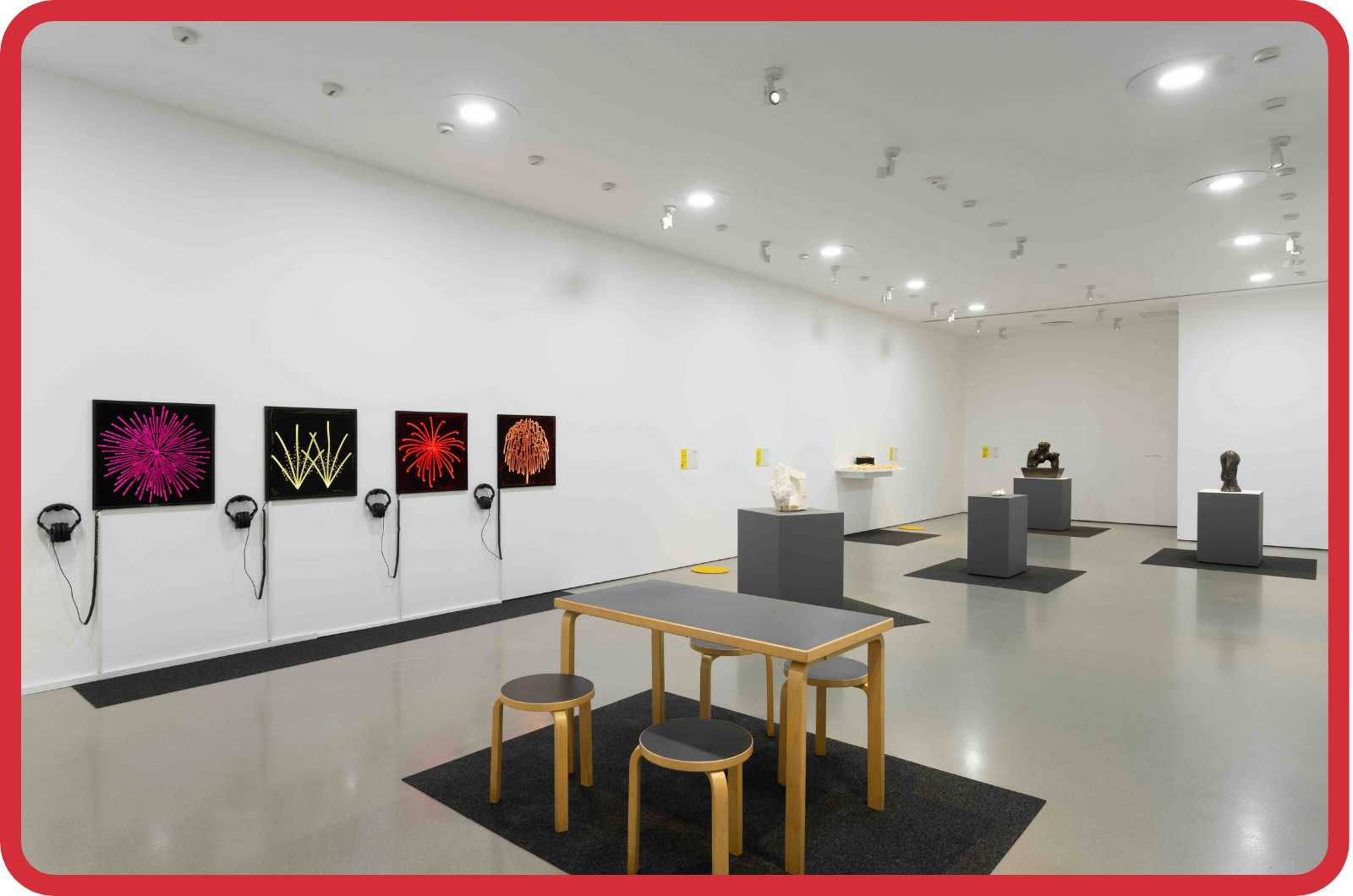
Please do touch
“It feels naughty”, another visitor says to me. She giggles as she runs her hands along Henry Moore’s famous 1967 bronze sculpture, Mother and Child: Arch. “Being able to touch it, you can pick up so much more,” she tells me. “The weight of it. The solidity.”
I’m wandering through the gallery, hands first. In every room, signs encourage us to “Please touch” the sculptures. I’m reminded of how when I go clothes shopping, my hands seem to lead the way, dancing towards the textures that please me: the airy roughness of linen, or that synthetic super-softness.
Yet in a gallery, it feels weird to be so tactile, to be engaging my whole body in this way.
I step right up to Moore’s Mother and Child. There are no barriers around the artworks; instead, carpeted tactile flooring and the word “Welcome” invites me to get closer.
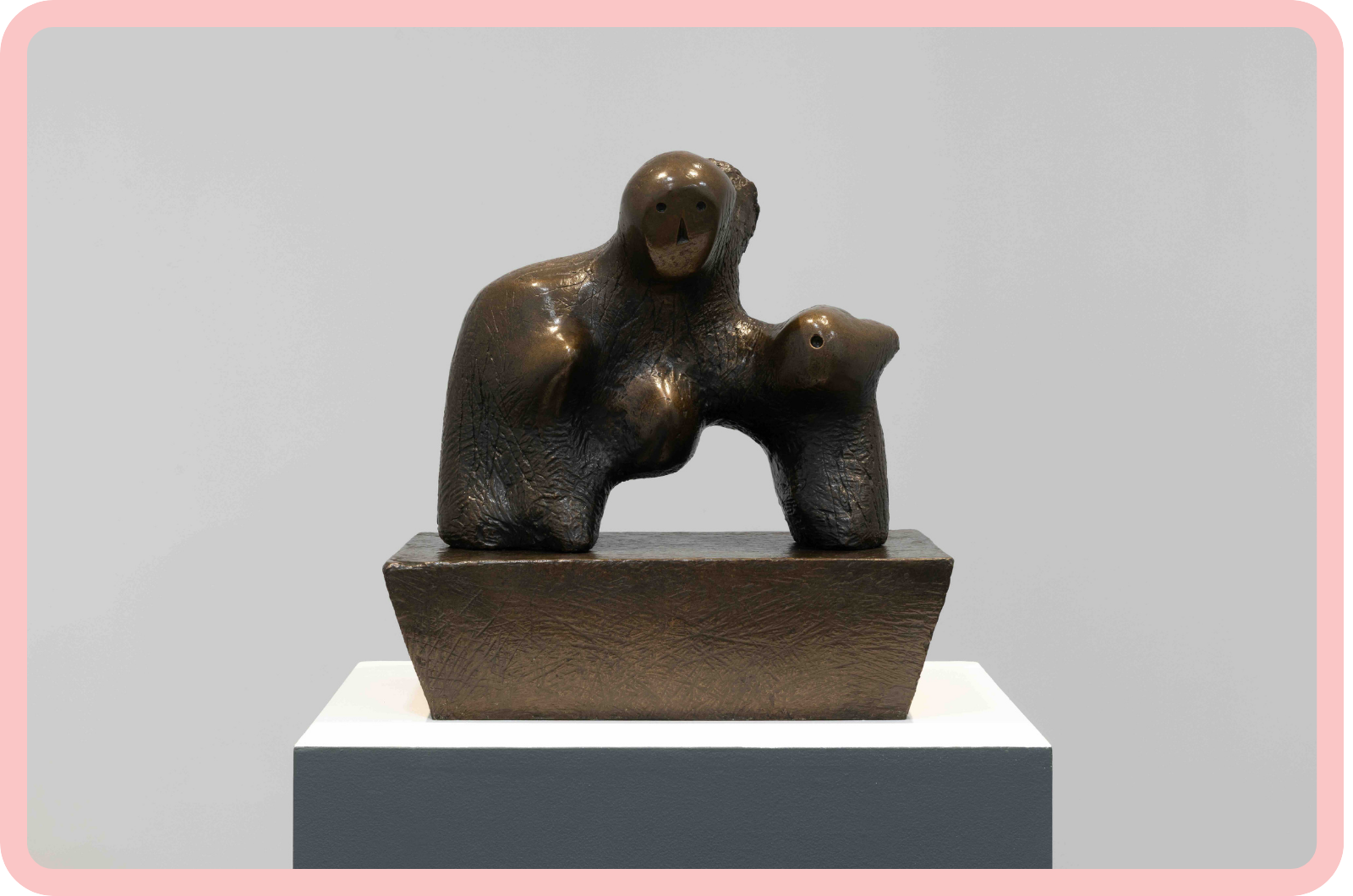
My fingers explore the bronze. I’m struck by its coldness, how it’s both so smooth and unexpectedly rough. I tap my nails on it and make a sound. When I bend down to smell it –sharp, slightly bitter, metal– my instinct is to glance over my shoulder to check if anyone’s watching.
Sculpture, by definition, exists in three dimensions. And yet we’re usually only allowed to experience it at a distance, behind a rope cordon and using just our sense of sight.
Today is different. We’ve been let loose in the gallery under specific instructions:
“Go into the exhibition, touch everything, listen to everything!”
It takes some getting used to.
The UK’s first major blind sculpture exhibition
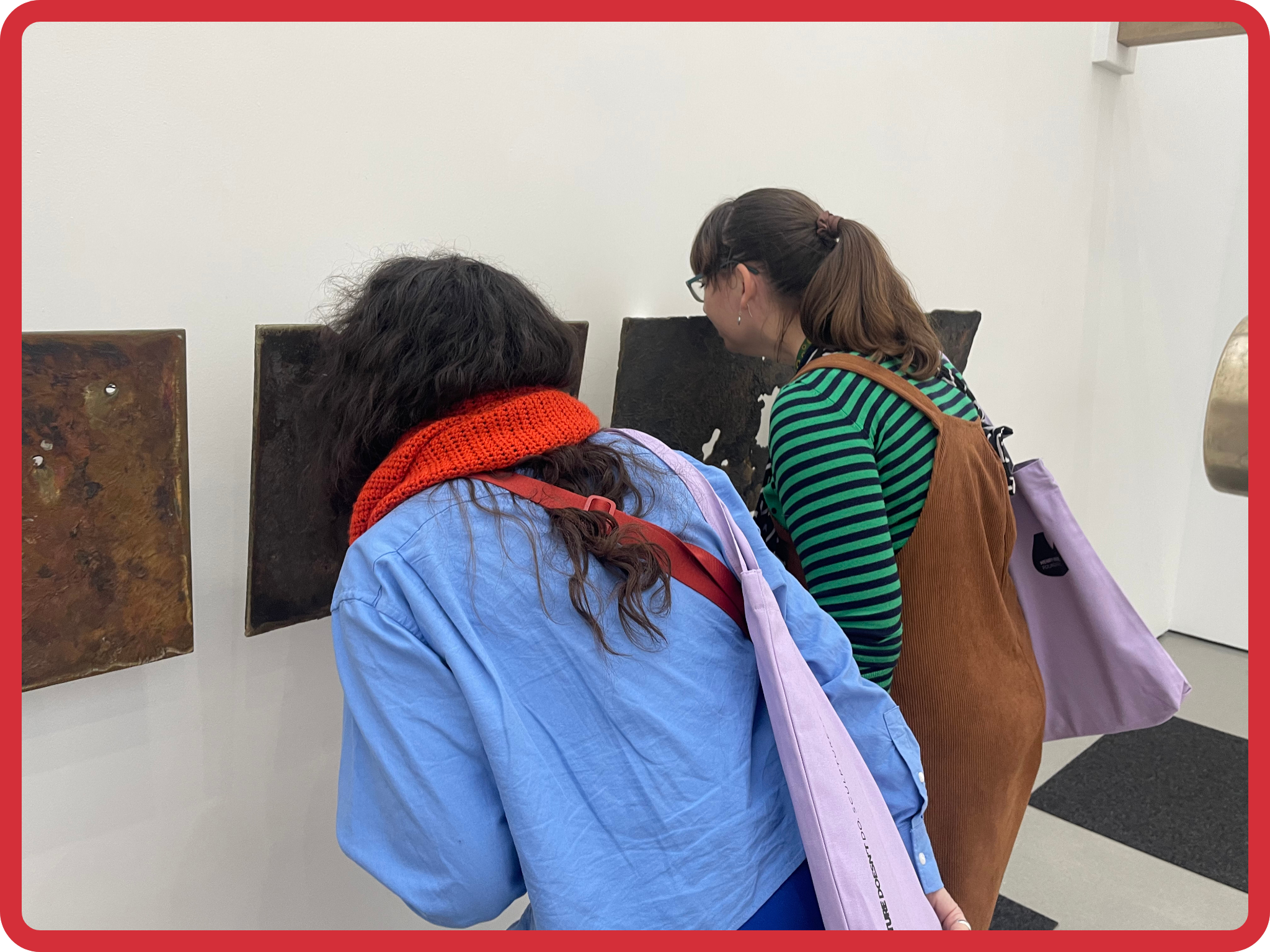
Beyond the Visual is the UK’s first major sculpture exhibition by blind and partially blind artists and curators. Held at the Henry Moore Institute in Leeds, the exhibition brings together sixteen international artists with contemporary and historical works. It combines new commissions by blind (and a few sighted) artists from around the world, and famous works by 20th century British sculptors Henry Moore and Barry Flanagan.
Neither Moore or Flanagan was blind, but both felt strongly that sculpture could only be properly understood when touched. “Touch is a part of your understanding of form,” said Henry Moore.
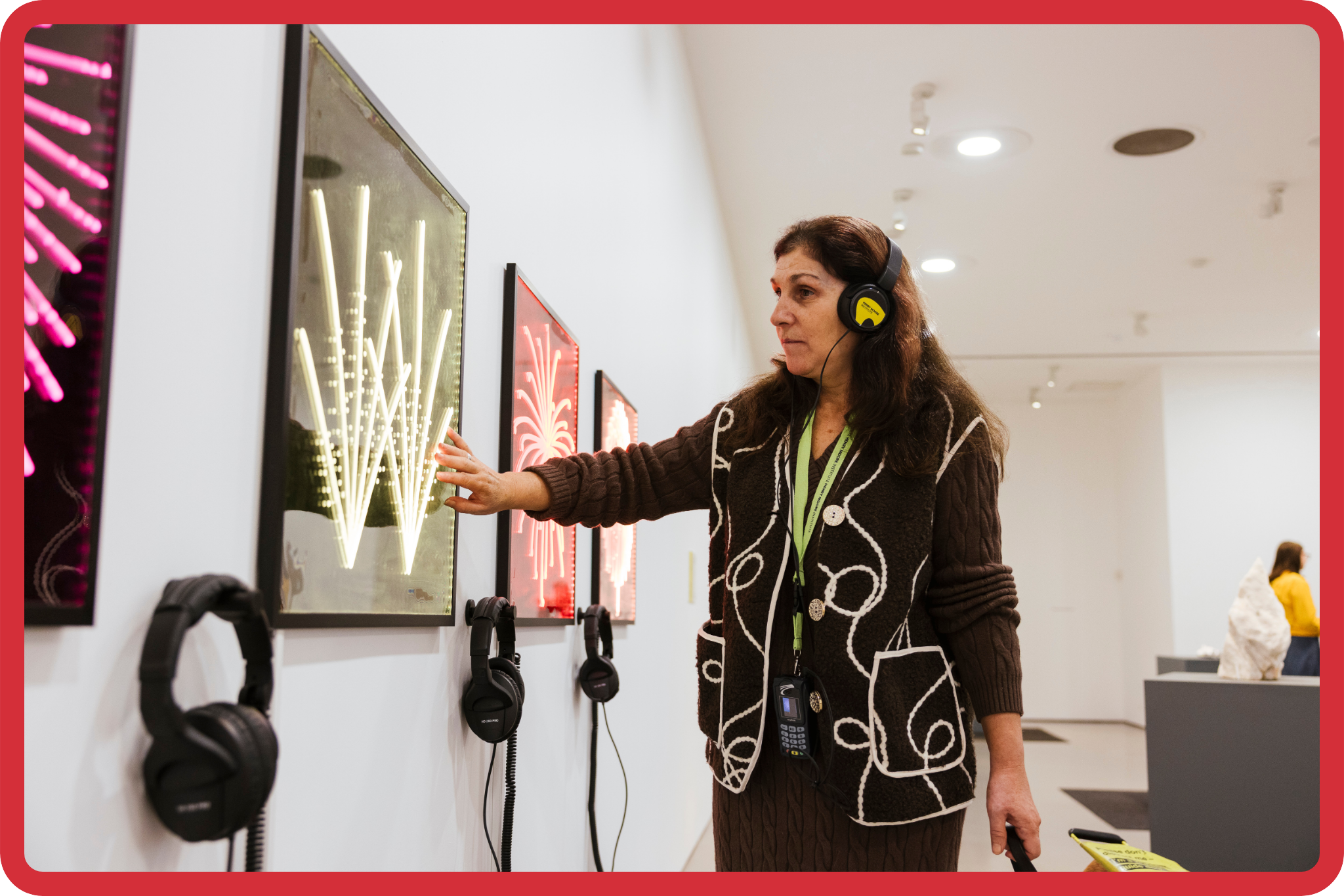
Accessibility has been baked into Beyond the Visual since its earliest stage. Each artwork is accompanied by braille signage and audio description, and the front-of-house team have had extensive training on being “sighted guides” and doing live audio description. But the most significant difference in this exhibition is that it’s pro-tactile. In other words, “every single thing can be touched” – something the Henry Moore institute has never done before.
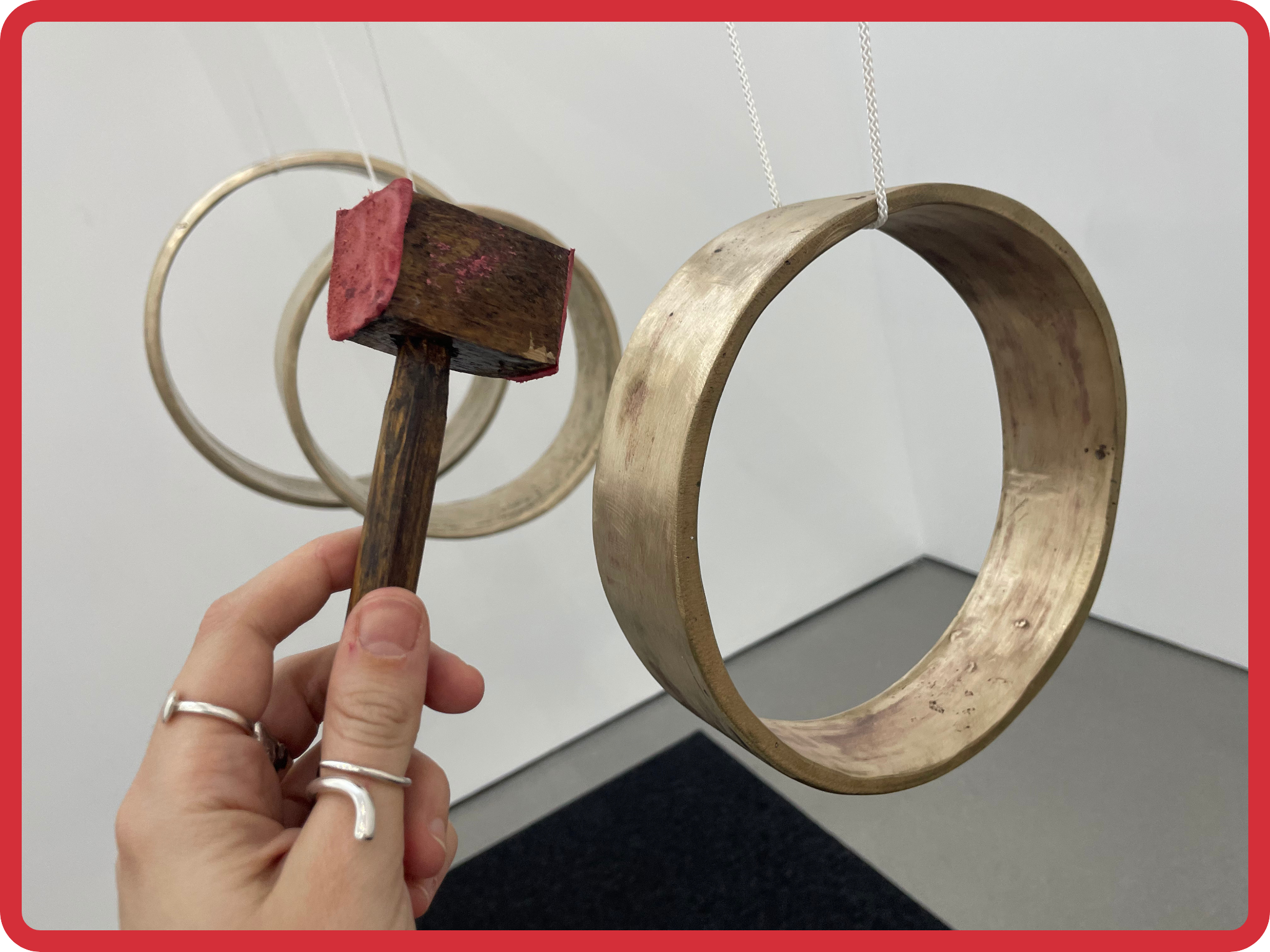
Rings (2025) by Aaron McPeake
“We don’t teach the senses or how to use them,” says Aaron McPeake, one of the exhibiting artists. “We teach how not to use them: ‘Don’t look at that. Don’t touch that.’ There is a sort of prohibition.”
I’m stood in front of Rings (2025), one of Aaron’s latest works. Large rings made of bell bronze, smooth to the touch, hang suspended in mid-air. When I hit one with a clapper, it emits a sound which Aaron describes as “somewhere between a bell and a gong.” Of course, the smaller rings have a higher pitch than the larger ones. Banging the bells, which clink satisfyingly against my silver rings, I lose myself for a moment.
To Aaron, this is how sculpture should always be experienced:
“If you can touch something, if you can put your arm through it, then your whole body becomes involved – your proprioception. ‘Where am I in relation to this object? If I move, what happens?’ For this exhibition, I think for all of us, it was about getting into the psyche of the beholders.”
Beholders. This is a word I’ve heard repeated in several of my conversations with the blind artists and curators. At first I think it’s just a synonym for viewers, but the more I hear it, I realise it infers that perception is about more than just our sight.
And when we encourage audiences to behold the artworks with all their senses, one unexpected consequence is that we need more seating:
“Exploring sculpture through touch takes more time,” says one of the curators. “You can’t just move on. You need to actually spend time, and that’s tiring. So you need places to sit and relax as part of that experience.”
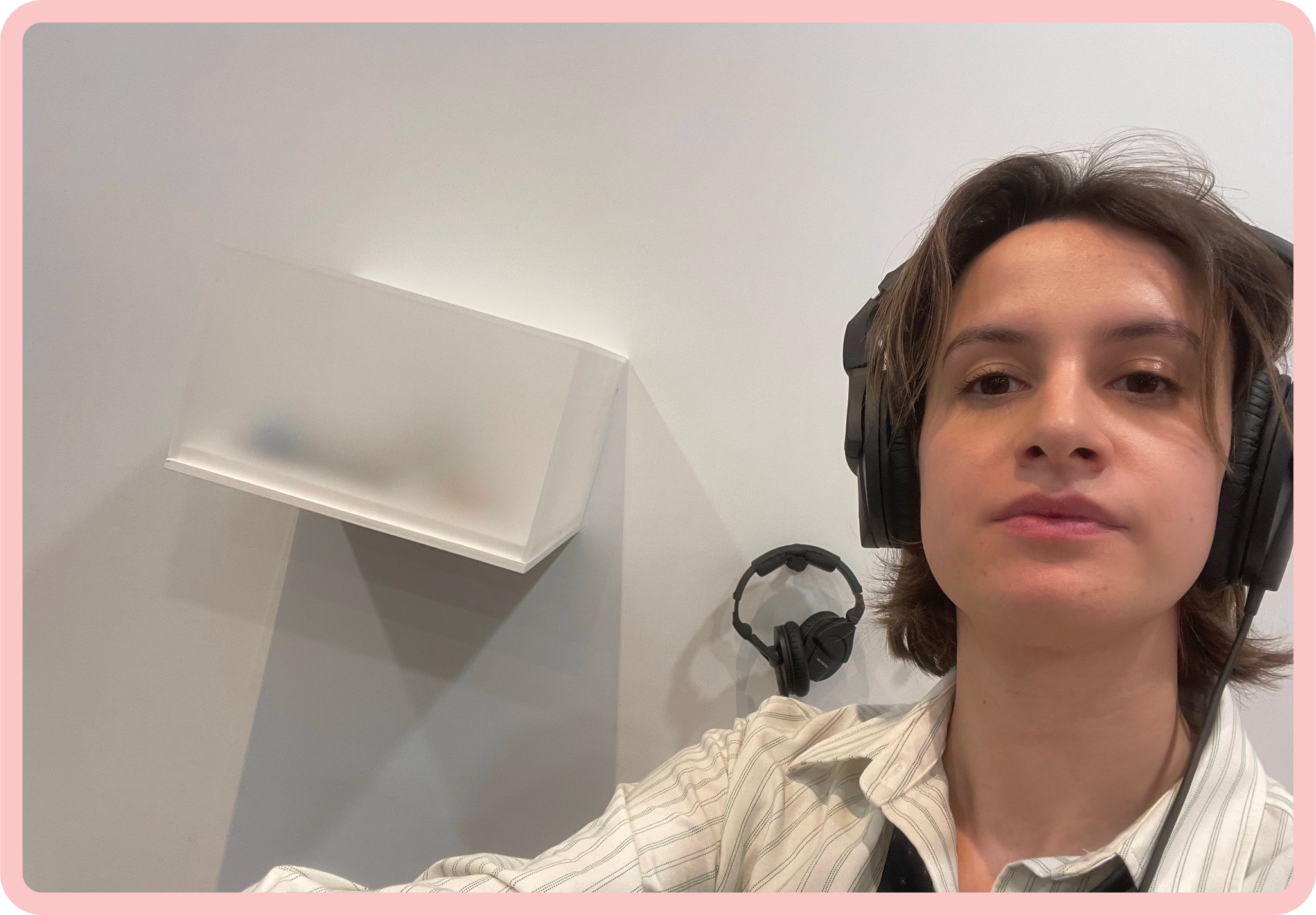
Listening to the artworks’ audio description also requires us to sit and slow down. Noticing I’ve been rushing, I pull up a stool and put on a set of headphones.
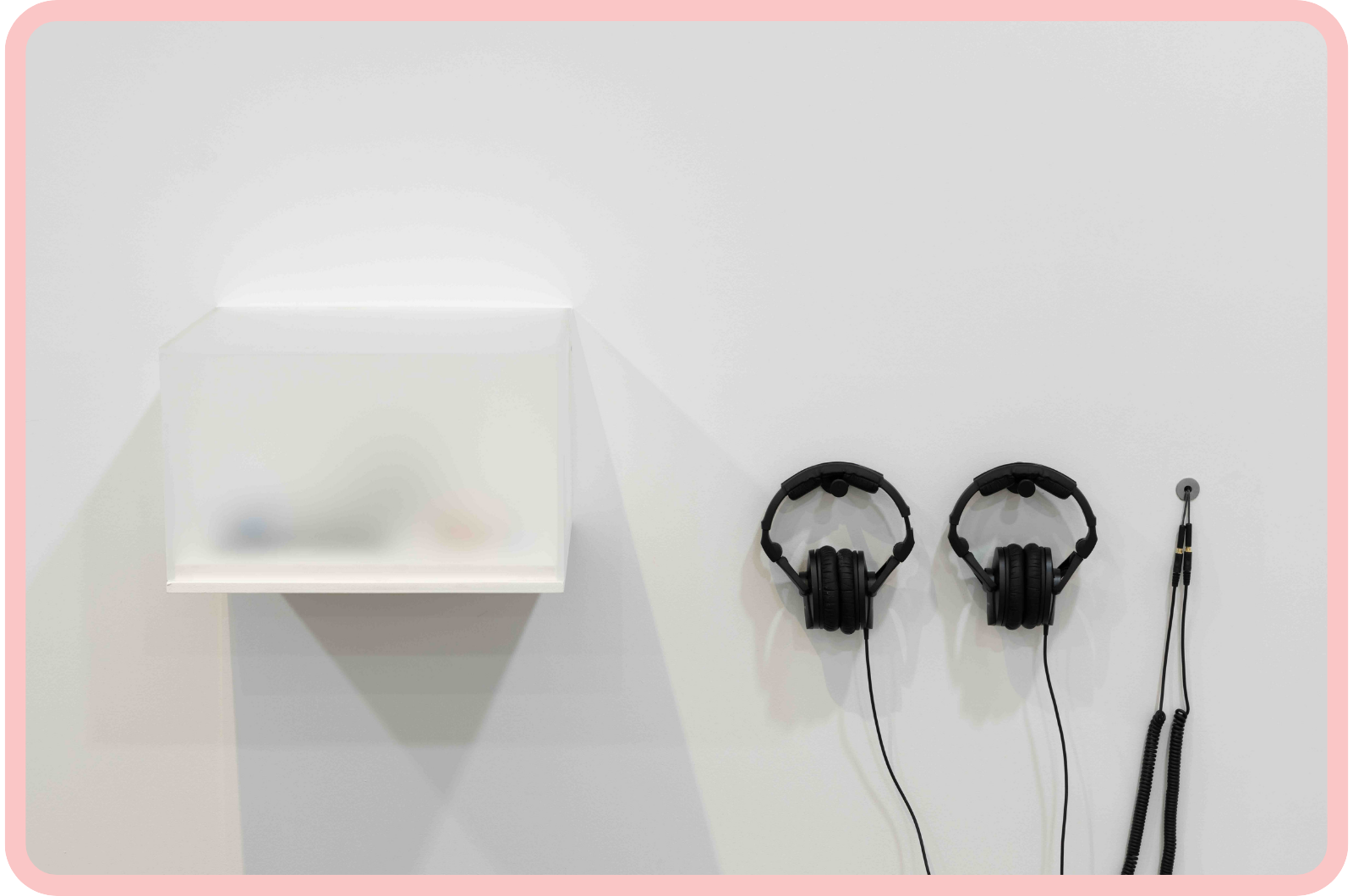
Pass Away (2025) by Serafina Min
I’m staring at an opaque glass vitrine, mounted on the wall. Inside it, I can see only outlines of dark shapes. I am sighted, yet my only way of experiencing this sculpture is through its audio description. I realise suddenly that despite audio description being available for every artwork in the exhibition, I’ve been lazy. I’ve been skipping it and leaning, as usual, on my sight.
But in front of ‘Pass Away’ (2025) by Serafina Min, I’m forced to listen to the audio description if I want to understand the work at all. Has Serafina done this intentionally so that people like me (sighted, with short attention spans) are forced to confront our ocularcentric bias? It feels like a sort of… leveller?
Serafina explains:
“Because the physical form isn’t all the way out there to be seen, or for people to touch, the audience is creating their own version of what my sculpture looks like. And in that way, to be honest, whatever I put in the vitrine matters less. The imagined sculpture that they have in their mind becomes the real sculpture.”
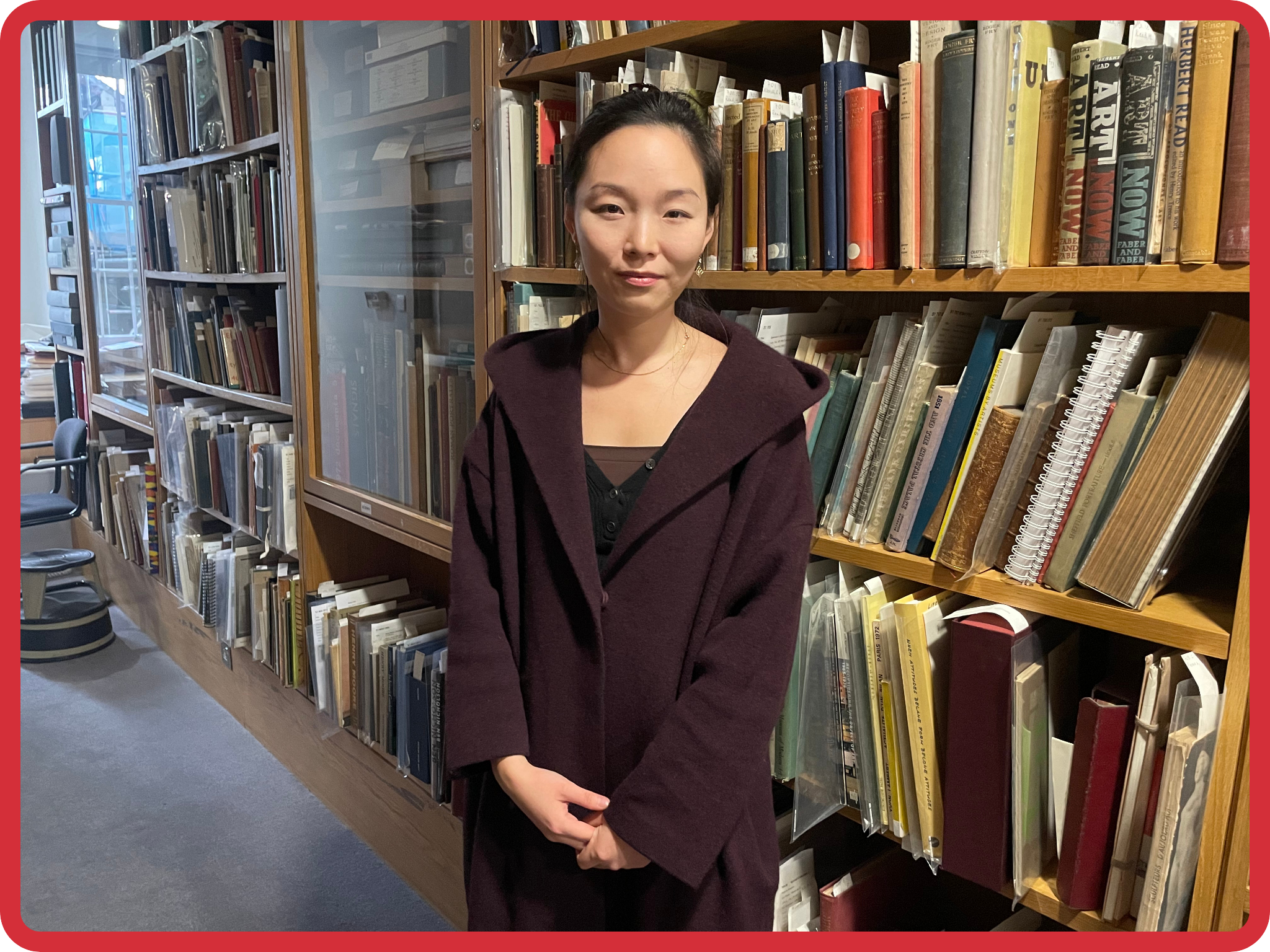
I ask her if there really is a sculpture behind the opaque vitrine?
She confirms that yes, behind the vitrine sit “three little sculptures” made of wax. She admits she toyed with the idea of having nothing behind the vitrine, but ultimately found:
“My own imagination isn’t as descriptive when I haven’t actually felt and had the whole sensory process of making. Only through that do I start to get the minute details that I actually want to describe.”
So why create a sculpture that can’t be seen, when she herself is sighted?
She tells me she has spent years teaching art at a school in London for blind and visually impaired students, and that she finds herself especially “drawn to audio works.” Also, there’s a certain magic in putting on headphones to listen to audio description:
“You create your own world,” she says. “It’s kind of a bubble, right? It’s close to your ear. It’s very intimate. It’s as if someone is whispering to you.”
Audio description
Pass Away is accompanied by a twelve-minute audio description, which Serafina wrote herself. It combines specific sensory details (“The shells are smooth and cold to touch”) and abstract, atmospheric imagery (“This is how you shape a creature made of wetness and memory”). It takes a creative rather than a literal approach.
My friend Joseph Rizzo Naudi is a blind writer and facilitator. His expertise is in collaborative artwork description and using blindness as a generative approach, and he worked closely with the Henry Moore Institute to create audio description for Beyond the Visual.
According to Joe, audio description is inherently creative; he jokes that calling it “creative audio description” makes no more sense than saying “Italian spaghetti.” Yet perhaps that expression is still necessary in an art scene that so often treats access as “antiseptic and clinical.”
Joe is inspired by the work of DeafBlind writer John Lee Clark:
“He's like: ‘Fuck access. I don't want access. I want what's beautiful. I want to be transported and affected and moved to all these different emotions. I want to live, I want to experience.’ And I really resonate with that.“
Joe approaches audio description by thinking about “what makes a really effective piece of fiction or evocative piece of poetry” which usually, is about “the creation of an incredibly vivid sense of a world.”
He adds:
“What have storytellers been doing for millennia, but giving people access to experiences which they are not physically able to perceive themselves? That’s audio description, by another name.”
Access to magic
“We’re always seeking experiences that make us or give us access to more than we are,” says Joe. Yet most of the time, access is conflated with transport and toilets; education and employment.
These things are crucial, of course, but as my contributors pointed out in my essay on accessible nightlife, access should also be about having equal opportunity to dancing, or sexual citizenship or art – the parts of life that make us feel alive.
What sorts of access barriers has Joe experienced in the art world?
“Oh,” he says, “From the ages of eighteen to thirty, I could probably count on my hands the number of times I went to a gallery or museum.”
He avoided galleries and museums, finding them “difficult to navigate” and “stressful.”
Given the barriers, then, what makes him continue to engage with art? What does he want from it; how does he want to feel?
“Oh, it’s magic,” he says, “It’s magic. It’s totally metaphysical and bizarre and wonderful and it’s a shortcut to sublime or God or love or whatever you want to call it.”
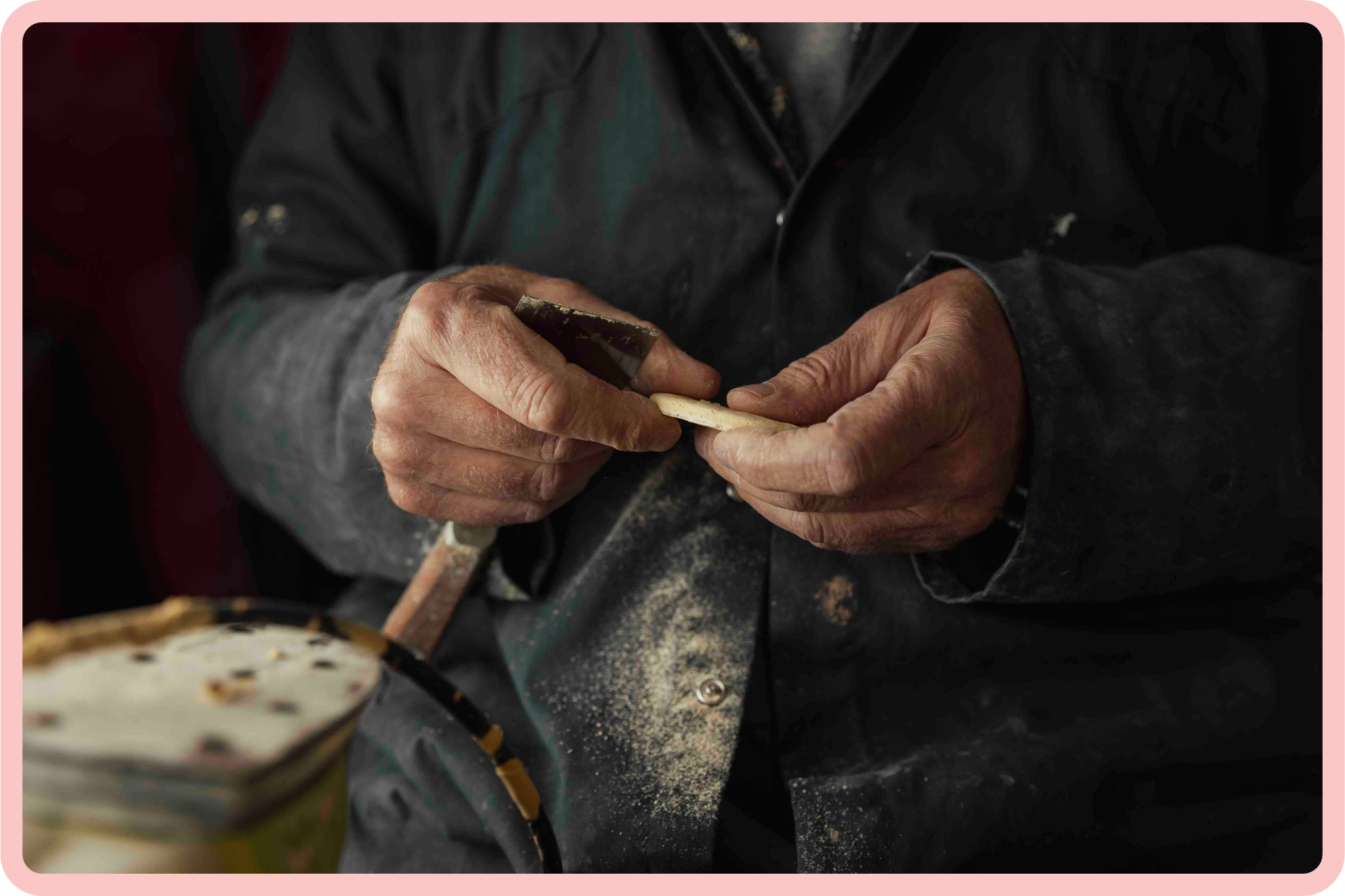
Aaron tells me what’s beautiful to him as a blind artist:
“The sound of waves, the sound of rain, the sound of the leaves and the trees. The differences in sound between a willow and an ash and a pine tree is incredible. The taste of things. Coffee. But the smell of coffee I think is much better than the taste of it.”
He pauses, then adds:
“But also imperfections. If something’s slightly out of phase, that’s incredibly interesting. It makes you listen. It draws you in and holds you there.”
In his work, Aaron deliberately includes what might look like visual mistakes:
“I make excuses when finishing things. I go, ‘Well, I can’t see it any longer.’ And people say, ‘But there’s still machine marks there.’ And I say, ‘Apologies, I can’t see it. I don’t care.’”
Because of blindness
I first met Joe at Maud’s engagement party. It was golden hour. Joe and I were lying on a picnic blanket in the grass, with another new friend, Sara. The sun was low in the sky, and the three of us, blissfully tipsy, were looking up at the canopy of trees; how their leaves caught the light.
Slowly, it emerged that although we were looking at the same thing, we weren’t quite perceiving the same reality. Joe, in particular, was seeing something different. Joe –and I’d briefly forgotten– is blind.
He told us what he was seeing. He used the word kaleidoscopic. He tried to explain the shapes in his vision. Then he brought up a term I hadn’t heard before: blind aesthetic. But I’m not sure Sara or I could quite follow. Maybe we’d had too much to drink. I made a mental note to ask him about it again sometime, sober.
Nine months later, Joe and I are close friends. Does he remember that conversation?
“Yes,” he laughs, “But I think I was a few Negronis deep.”
What does he remember?
“We were looking up at the leaves,” he says, “And the leaves were catching the gold of the canopy.”
What did he mean by blind aesthetic?
“The way I was seeing the canopy when we were looking up was beautiful to me,” he says. “There was so much there, not even in spite of, but because of the unusual, trippy, abstract, mosaic of vision that I have.”
He explains:
“To think about blind aesthetics is to consider the ways the blind maker, artist or writer can approach the making process and make something through their blindness rather than against it.”
I’m still trying to imagine what Joe was seeing in that moment. I’m trying to see things through his blindness, rather than against my own sight. I guess this is the challenge of friendship; the trying and often failing to understand what it’s like to be in another person’s body.
And yet we find ways to reach each other – to get beyond our skin.
Art and audio description offer us a way to collapse the boundaries of our bodies. As does friendship.
What a gift!
Celestine
Thank you…
Thanks to the Henry Moore Institute and Sam Talbot PR for inviting me to the Beyond the Visual exhibition press day. Thanks to Joanne Crawford, Rob Harris, Rob Hill and Sara Romanin Jacur for the photos.
Thank you to Dr Aaron McPeake and Serafina Min for talking to me about your artworks. Thank you Maud Mokren and Joe Rizzo Naudi for your friendship, and Joe for chatting with me about audio description and blind aesthetics.
Thank you to Theodore Fraser for essential editing.
Please note: I was not paid to write this essay, and I’ve had complete editorial control over its content.