


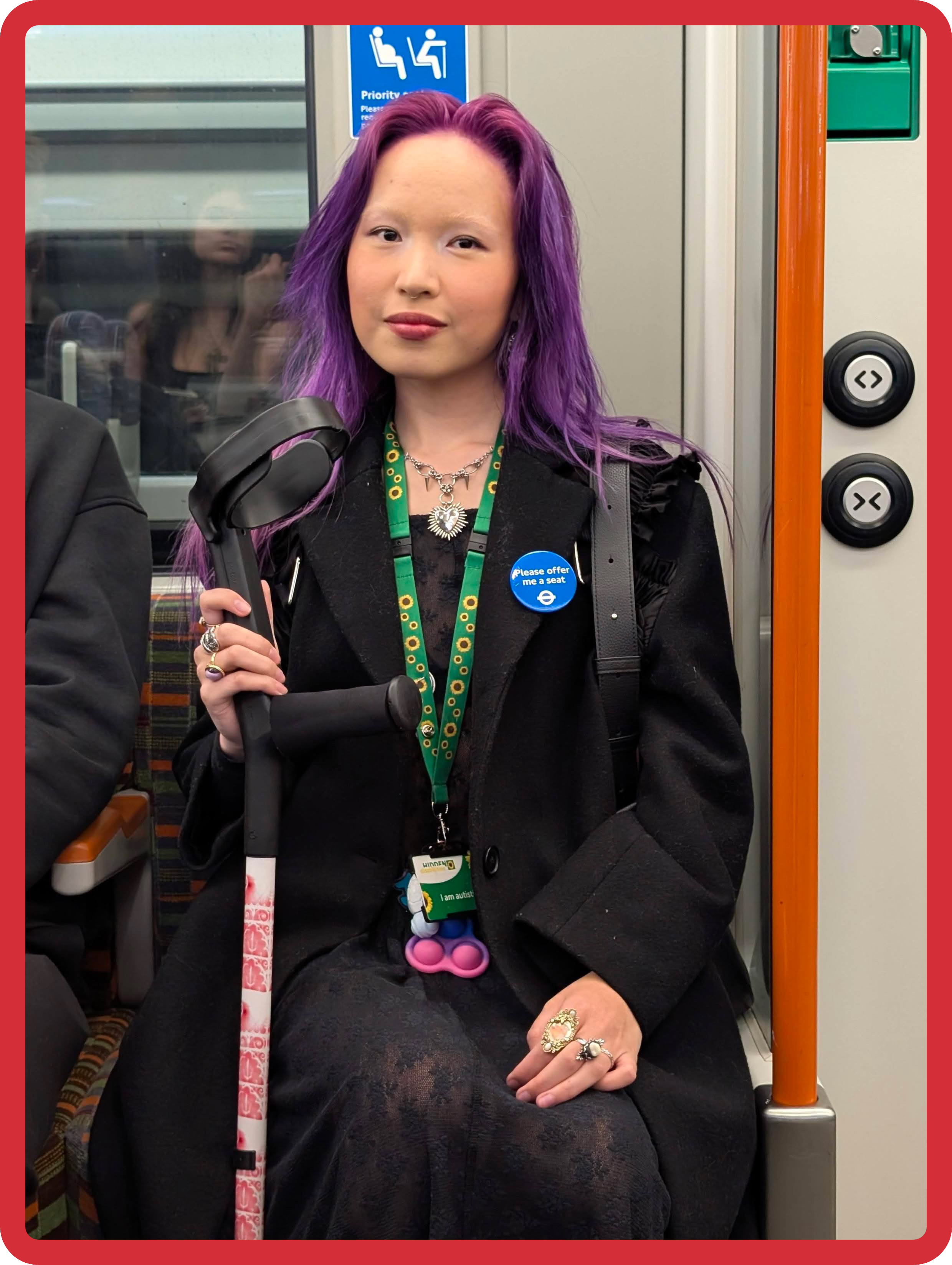
Hello, and welcome to Body Babble! You can help me keep publishing independent essays and reporting on disability, access and queerness by:
subscribing
sharing this post with someone who might like it
considering a monthly paid subscription
In any case, thank you so much for reading!
Celestine x
Dear every body, today we’re talking about people with non-visible disabilities’ experiences wearing Transport for London’s (TfL)‘Please Offer me a Seat’ badge.
Launched with a trial in 2016 and then officially in 2017, the blue TfL ‘Please Offer Me a Seat’ badge has now been used on public transport by Londoners with non-visible impairments for a decade. The badge can be ordered for free online and according to TfL, 140,000 have been claimed since its launch.
I was born in London and grew up here. As a teenager, I zipped around the city on the Tube, going to parks, free gigs or friends’ homes. But when I became ill at eighteen, my access to the city completely changed.
Between 2013 and 2019, I was able to take the bus to get to university or the cinema, but I only took the Tube a handful of times: the heat, steps, and having to stand or walk long distances made it too difficult. Then, for the four years I was mostly housebound, only going out occasionally and using a wheelchair, the Tube and the sound of its closing doors became a distant dream.
That is, until 2023, when my mobility began to improve and I was eager, like a tourist, to explore the city again. By this point I could walk longer distances, but standing still for more than a few minutes was a challenge.
I have PoTS, a dysfunction of the autonomic nervous system, which makes me prone to fainting with prolonged standing. If I stand still for too long, I get extremely hot, dizzy and faint. In other words, the only way I can travel safely on the Tube is if I always get a seat.
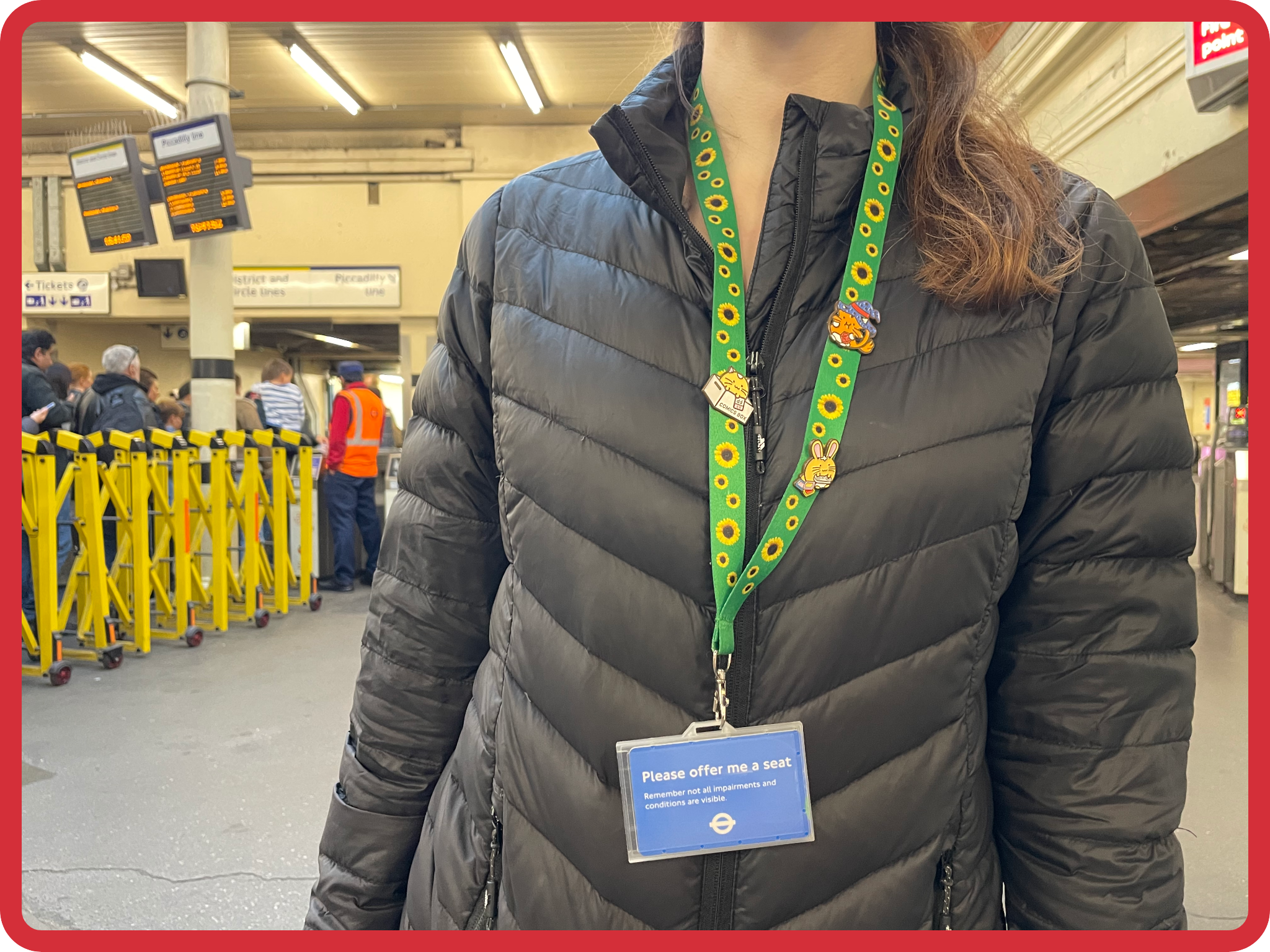
So I ordered a ‘Please Offer Me a Seat’ badge, as well as a Hidden Disabilities Sunflower lanyard, which was rapidly becoming the best-recognised symbol for non-visible disability. And tentatively, I began to take the Tube.
Of course I’d anticipated that I’d be stared at, and often ignored. I knew this because using a wheelchair had commanded its own kind of unwelcome attention. But what surprised me was how, now that my disability was less visible, the attention was of a different sort.
It wasn’t a response to visible difference but rather to its lack. The discrepancy between my appearance and youth and the fact that I was asking for a seat generated in strangers a mix of confusion, suspicion and scorn. I hadn’t felt so self-conscious since I was a teenager.
All from wearing a 4cm piece of plastic!

In this edition of Body Babble, we’ll cover:
People’s experiences wearing the ‘Please Offer Me a Seat’ badge
The ‘Baby on Board’ pregnancy badge
Disabled people “faking it”
The design of the badge
A sticking plaster to a structural problem?
What it’s like to wear the badge…
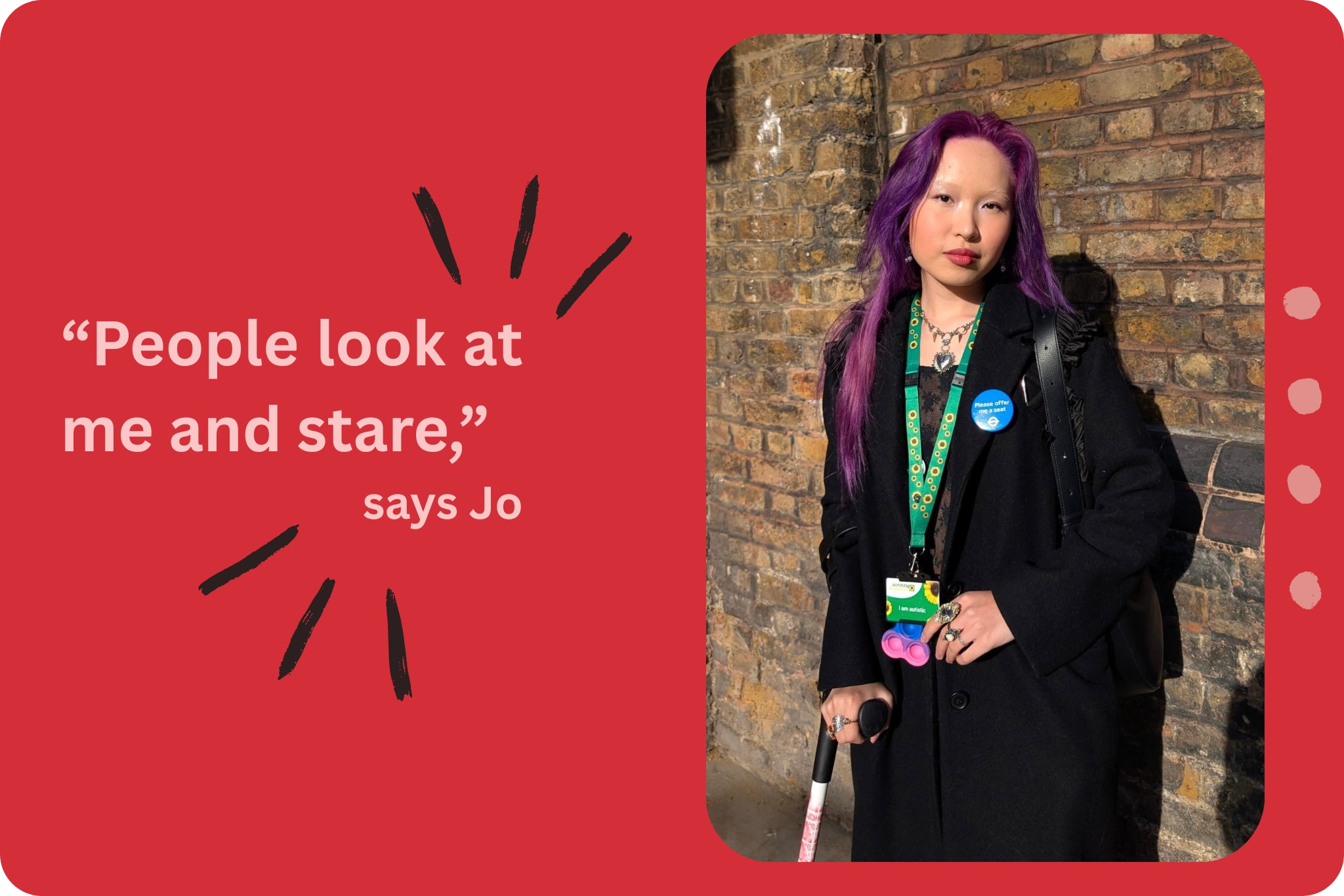
“Are you going to catch me if I pass out?”
Jo, 21, lives with “a bunch of chronic illnesses,” including M.E/ CFS, Ehlers-Danlos Syndrome, PoTS and Endometriosis.
“I get dizzy very quickly and get blood pooling,” they explain. “Having a seat makes sure I don’t pass out and stops me from feeling as much fatigue and pain from having to stand and balance on the tube.” They add:
“It’s not like, ‘I’m a bit tired, I want to sit down.’ It’s like, ‘Are you going to catch me if I pass out?’
Jo wears their badge attached to their sunflower lanyard, because it “makes people believe you more”. But they describe the experience as “very hit-or-miss”.
“Sometimes people will look at the badge, look at me and just stare [...] Because I'm young and people don't understand that young people can have disabilities and need support. But other times people are really lovely and they offer me a seat straight away.”
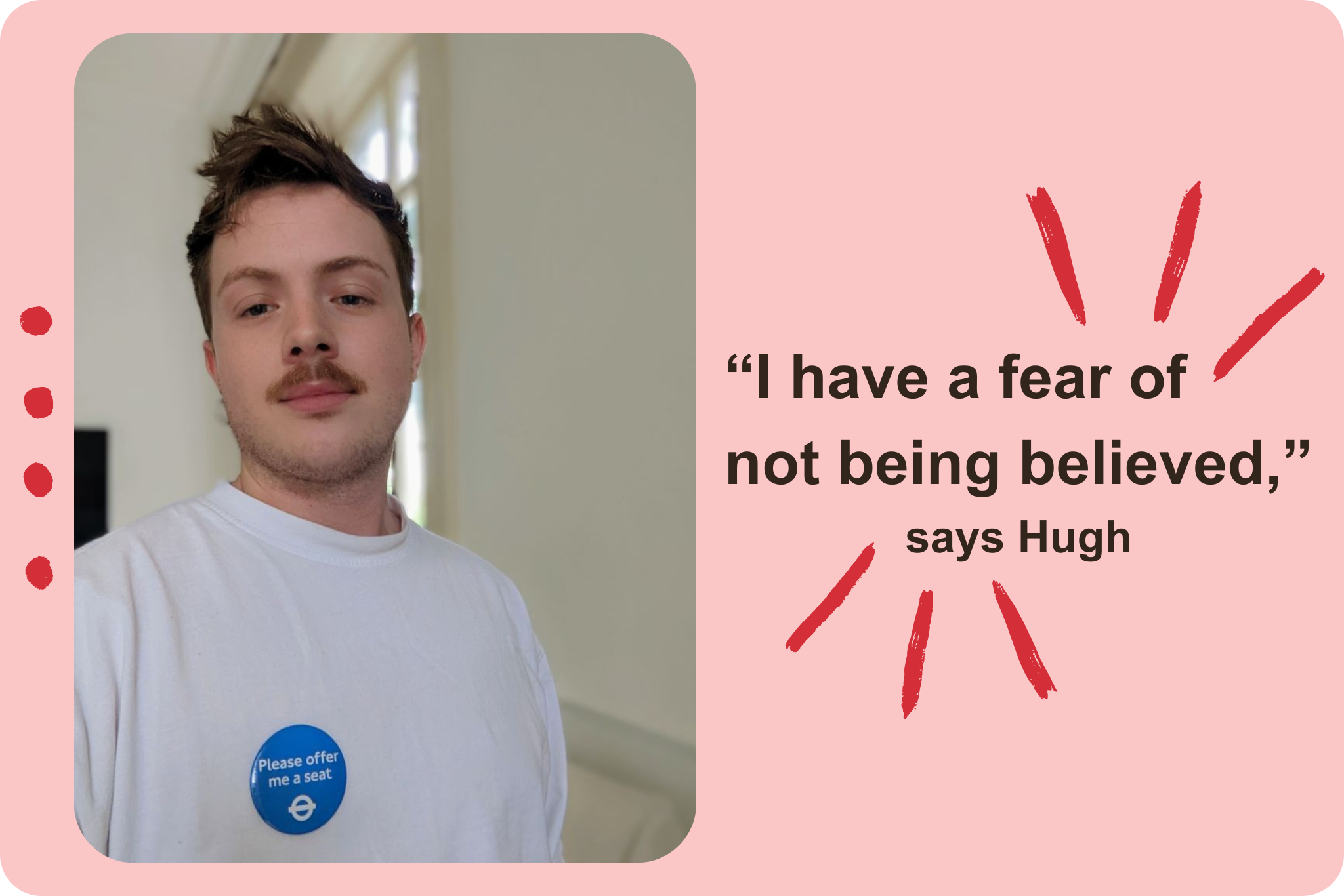
“A very deep fear of having to justify”
Hugh, 30, moved to London from Australia seven years ago. He has Limb Girdle Muscular Dystrophy, and while he is able to stand if he really has to, he “will feel pain”, will “run out of energy elsewhere”, and has “a risk of falling.”
He’s worn the badge only a handful of times, because of “not wanting to be singled out, not being sure that people really know what it's for, and also a fear of not being believed.”
He’s seen horror stories online about people “being challenged or harassed in public”:
“I have a very deep fear of that, and needing to explain or justify. I think also because my disability is rare, if I tell people what it is, they won't have heard of it. Having to explain it feels very vulnerable.”
Thankfully Hugh recently had a positive experience on the Tube, where a fellow passenger reacted to his badge kindly and discreetly, giving him a seat: “I was nearly brought to tears because I have such a fear of the opposite happening.”
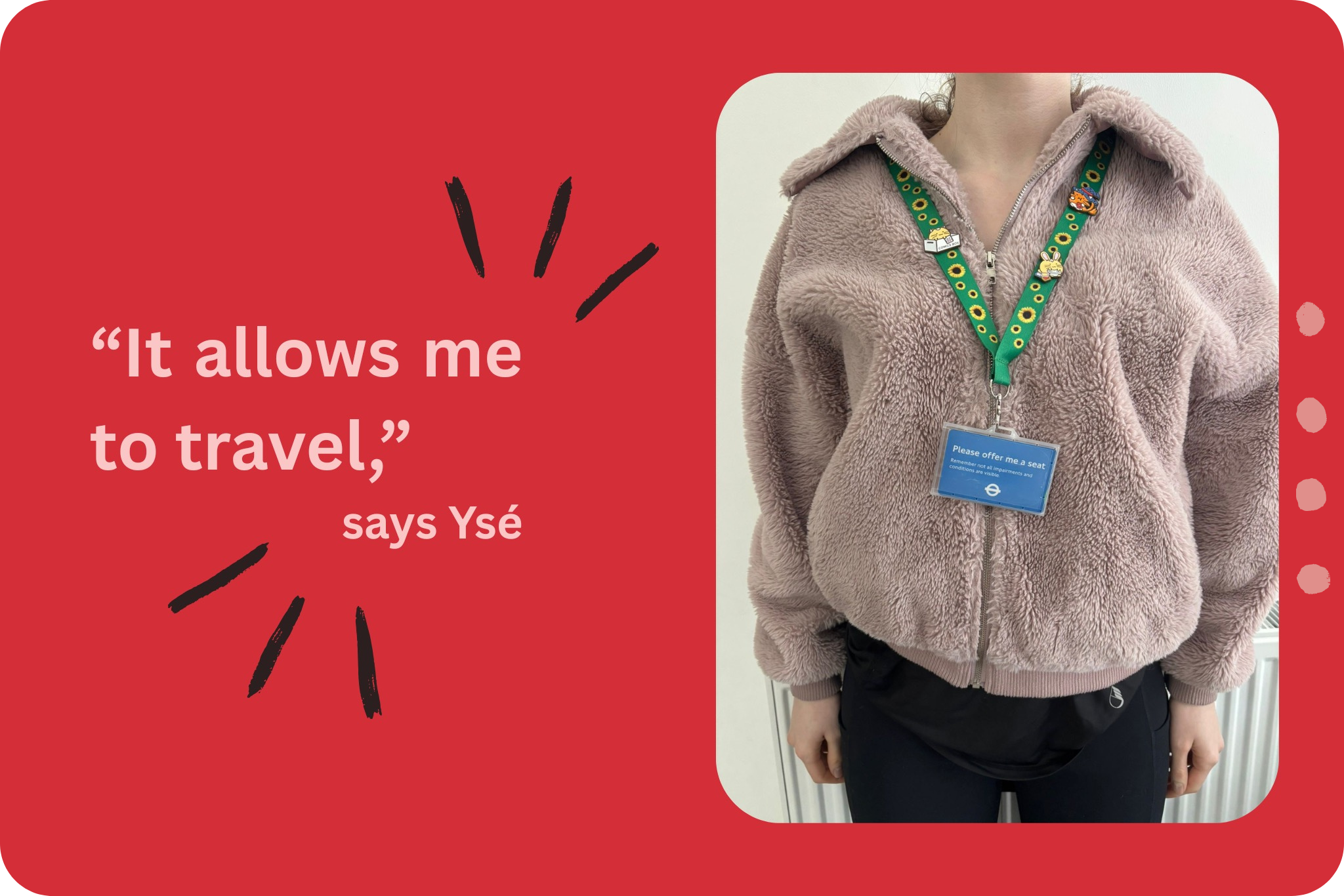
“Unless you’ve got a crutch, you’re not taken seriously”
Ysé, 26, is autistic, has anxiety and PTSD, and gets extremely overwhelmed on public transport. Sitting down gives her space from other passengers and reduces overstimulation: “Every sensory input that I receive multiplies and multiplies and multiplies.”
She wears the ‘Please Offer Me a Seat’ card on a sunflower lanyard, because the bright green lanyard is more visible and is also more widely recognised. And yet after wearing it for four years, she has not once been proactively ‘offered’ a seat. Despite this, she continues to wear the card, describing it as “my independence.”
She asks people in the priority seats if she can sit down, showing them her card and lanyard, which provide a visual cue that she’s “eligible” without having to explain the ins and outs of her disability. She has occasionally been refused, and once was laughed and shouted at, but most of the time someone will get up when asked by her directly. However, she says:
“I will then keep showing the lanyard because when people give me their seats, I’ll get a lot of dirty looks. Unless [you have] a very visible disability, you’ve got a crutch or something, [you’re] not taken seriously.”
She adds:
“If someone has a Baby on Board badge, people will offer them a seat. But the disability one, you see that less.”
Parallels with pregnancy
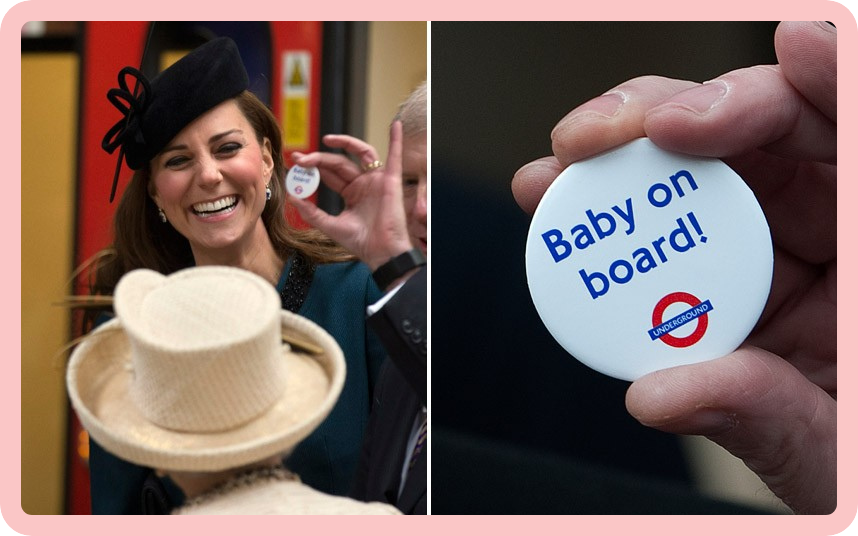
TFL’s ‘Baby on board’ badge was introduced in 2006, and is now claimed by 80,000 people each year. Remembering that my cousin Helena wore the ‘Baby on board’ badge in 2024 when she was pregnant, I ask her about her experience.
She tells me that wearing the badge, she was given a seat on the Tube probably 60-70% of the time – usually by young women in their twenties or thirties. When no one got up for her, she would ask them directly.
“I don’t think I ever got met with anyone saying no, at that point,” she says, “Although some people do look disgruntled. I think a lot of people pretend to be engrossed in their phone or book. They just don’t want to make eye contact.”
Helena especially needed to sit down early on in her pregnancy because she felt nauseous and faint. But at that stage, though she wore the badge, she “wasn’t visibly massive, so people were less likely to offer a seat.”
Though Helena’s experience was a “mixed bag”, she doesn’t describe the fear, guilt or second-guessing oneself that seems be part and parcel of having a non-visible impairment.
On a reddit discussion about the ‘Please Offer Me a Seat’ badge, one woman writes:
“For a month I switched out my ‘please offer me a seat’ for a ‘baby on board’ badge because I was curious about the relative success rate. Every busy tube ride with a ‘baby on board’ badge I’d get offered a seat whereas with the disability badge it was about one in four.”
It’s interesting how pregnancy –a kind of temporary disablement– usually receives public legitimacy, while people with chronic non-visible illness are so often questioned or accused of malingering. It’s strange, given that so many of the symptoms (nausea, fatigue, feeling faint) are similar.
“Men should have the strength”
Meanwhile, Hugh is affected by a different set of expectations – namely the “perception of me being a man, and my age, that I should have the strength.”
Due to his muscular dystrophy, he is weaker in his upper body and struggles to lift his arms above his shoulders. “I physically can’t,” he tells me, “Rather than it’s tiring or painful.”
Not long ago, on a flight, he asked the cabin crew if they could help him put his bag in the overhead lockers. The air hostess told him, “If it’s too heavy for you, it would be too heavy for me.”
While a masculine presentation can open your disabled identity up to scrutiny, presenting as feminine or put-together can, paradoxically, have a similar effect:
“I find that I get more judgement if I’m wearing makeup, or if I’m dressed nicely,” says Ysé. “It’s almost like you can’t present yourself well and also be disabled.”
“A culture of suspicion”
Even though the vast majority (70-80%) of impairments are non-visible, in the popular conception disability is still so often synonymous with a wheelchair. There is a stark lack of disabled representation in the media, and when disability is represented, there is often an over-reliance on images of wheelchair-users.
But I think there is something darker going on, as well. In a political climate where people are competing for limited resources, people with non-visible impairments become an easy scapegoat.
“I frequently feel I have to justify my disability,” says Hugh. “I think it relates to the current narrative of ‘disabled people cheating benefits’ or ‘people stealing their grandparents’ Blue Badge’.”
In the UK, the public obsession with ‘catching’ disabled people ‘faking it’ is longstanding. In the noughties, use of the term ‘benefits-scroungers’ was rampant; after Covid, Prime Minister Rishi Sunak used the term ‘work-shy’; most recently, the Motability scheme (which leases cars to disabled people) has been attacked in similar terms.
Ableist rhetoric is now being used to describe all sorts of different disability benefits and initiatives. Last month, an article about the sunflower lanyard in The Telegraph had the provocative subtitle “Self-diagnosed passengers use disability lanyard to claim VIP lounge access.“
In The Guardian, Frances Ryan describes a “culture of suspicion” in which disabled blue badge users are experiencing a rise in abuse.
Meanwhile online, when a disabled content creator goes viral, the comments section often reveals an equally insidious problem. Under a TikTok about the ‘Please Offer Me a Seat’ badge by creator Disabled Eliza, the top comments are overwhelmingly negative.
“‘how can I be a victim today’” reads one comment with 20k likes.
“no one owes you anything. hope this helps”, reads another, with 19.4k likes.
“i would ignore this totally”, reads another, with 3.9k likes.
Passing and masking
When the stress of disclosure becomes overwhelming, some people prefer to conceal their impairments. That some of us can hide our impairments on command is a privilege. And yet doing so can be physically or mentally painful.
“I have the luxury with my energy budgeting of being able to say, okay, if I get on a train and there just isn't a seat that's readily available for me, I just decide to give up that energy and push through,” says Hugh, “Rather than experiencing the risk of public humiliation.”
In order to “pass” as neurotypical in public, Ysé goes to great lengths to hide that she is autistic – a strategy known as masking. For example, she’ll suppress her stimming, even when experiencing a meltdown. But masking is exhausting:
“I always felt like I have to keep it internally,” she says. “But it’s all still happening inside. I’m just not physically showing it. And then I would not be able to leave bed for the next couple of days because of how much stress my body has not been able to express.”
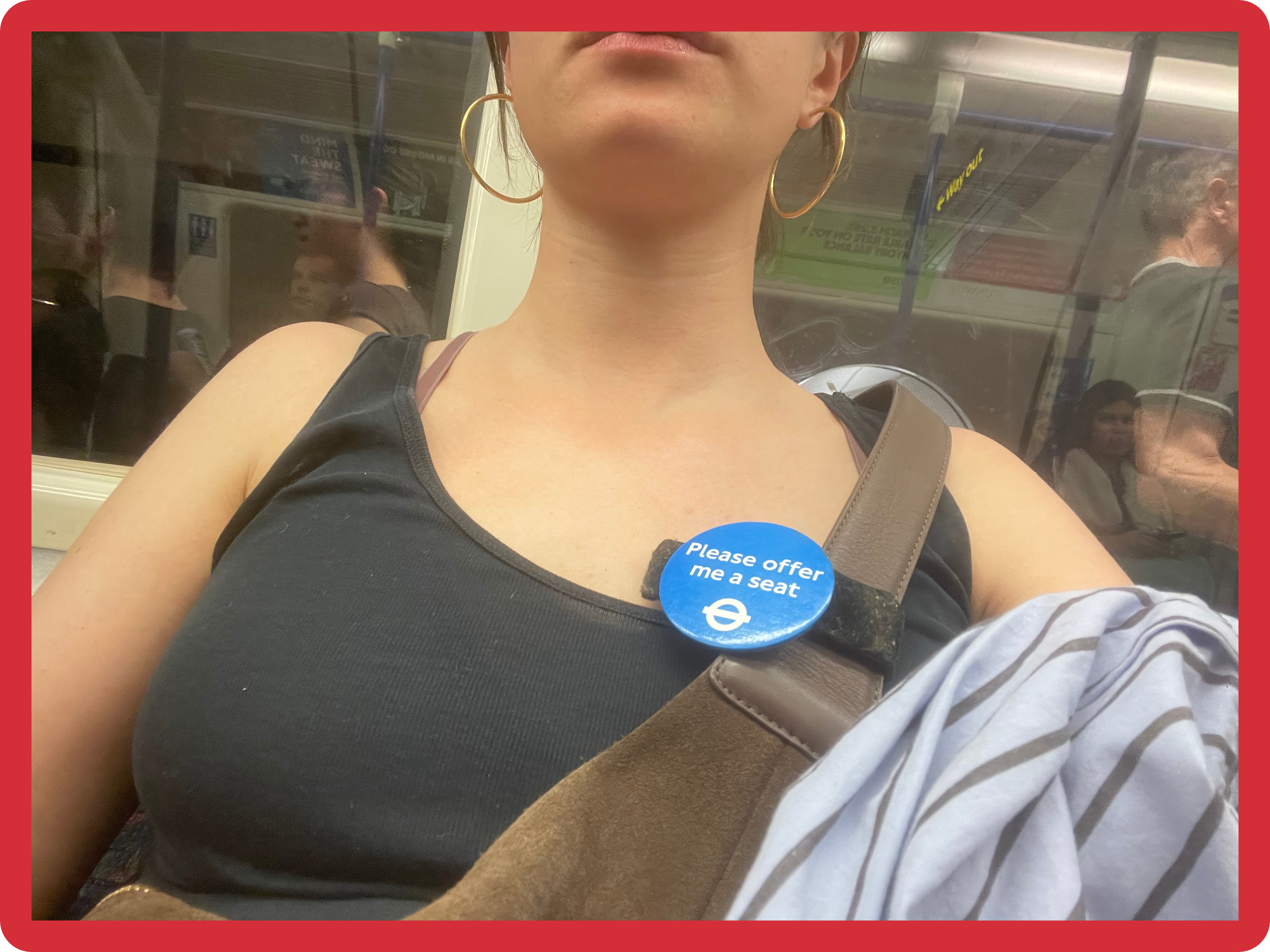
The design of the badge
So what’s the solution? Could the design of the badge be more effective and less frightening to wear?
The first thing that strikes me about its design is that it lacks any explicit reference to disability.
Jo says:
“I understand why the TfL sign is there to show it's an official TfL thing. But maybe adding a hint of something to signal that it's because I have disabilities, so people understand why [to offer me a seat]. Because sometimes people are just confused.”
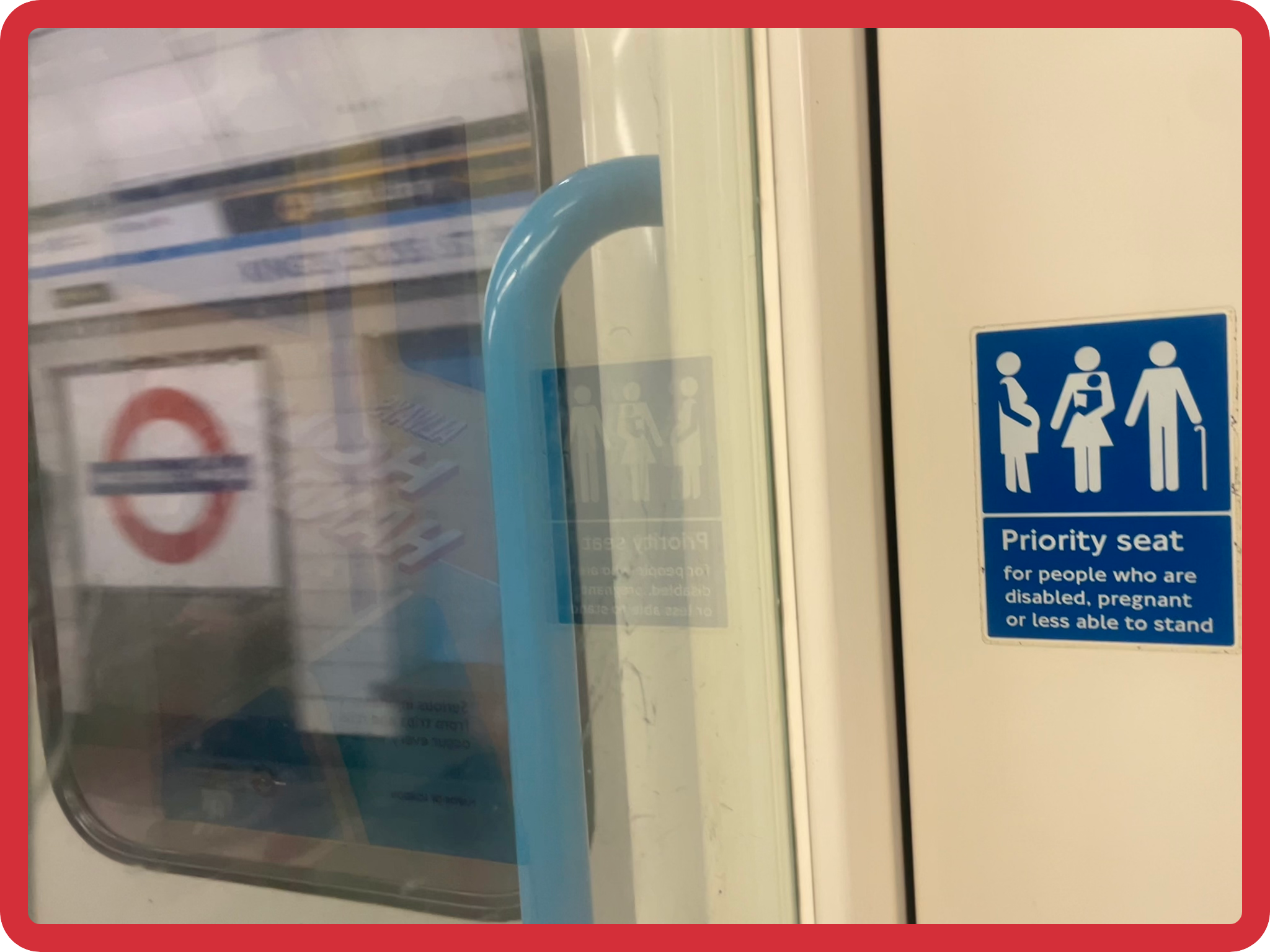
Jo suggests adding the “generic wheelchair sign”, known officially as the International Symbol of Access (ISA); the ISA has been a global emblem for accessibility for 50+ years, since its adoption by the United Nations in 1974. Jo and Ysé also both suggest adding the phrase “Remember not all impairments and conditions are visible” to the badge (it’s already on the card, and on TfL signage).
I personally think the badge could also be made bigger, because on crowded trains and in winter especially, it isn’t very visible and is easily hidden by layers of clothing.
Raising awareness
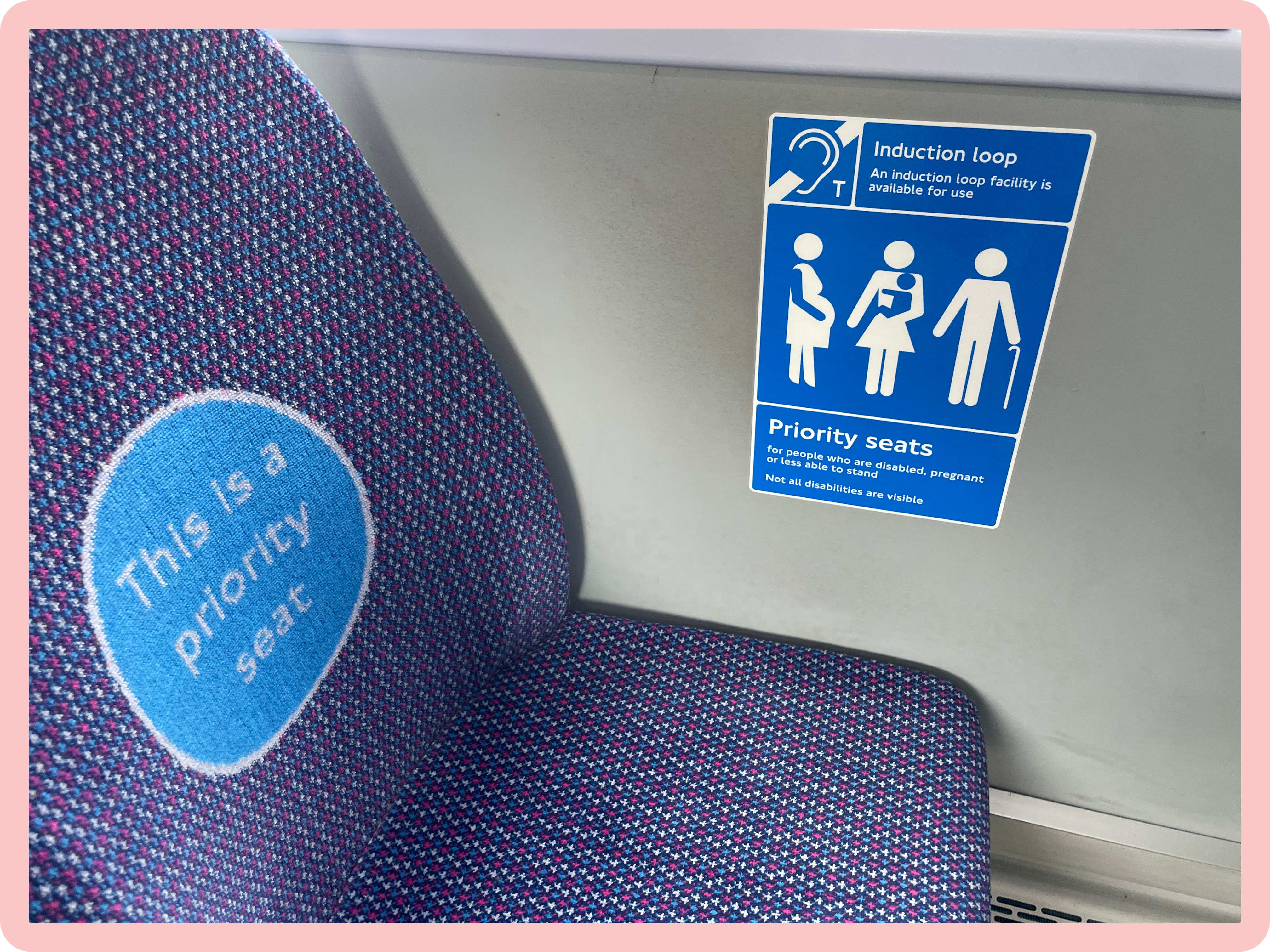
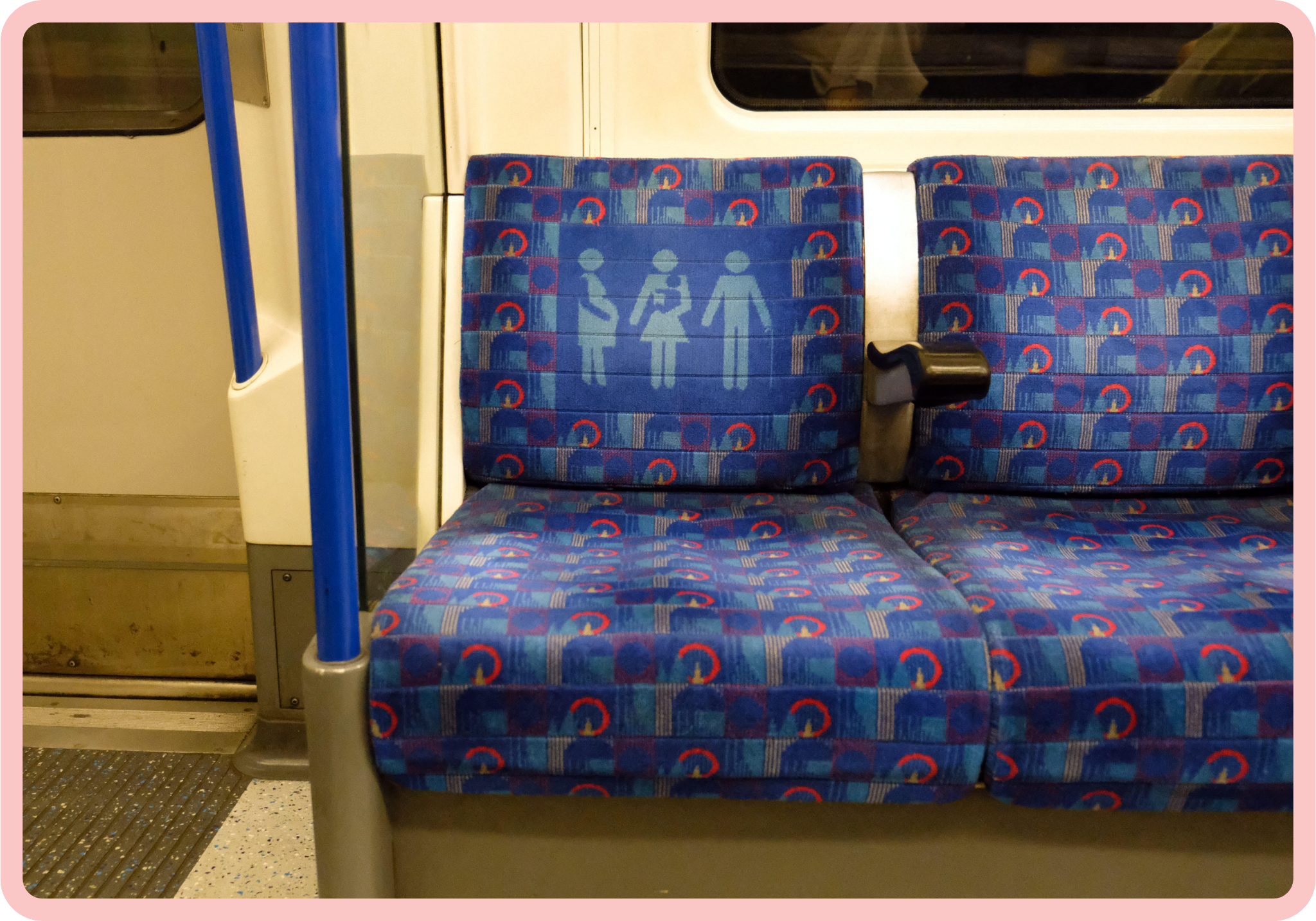
Ysé thinks the effectiveness of the badge could be improved with better signage, particularly for priority seats. “They’re not consistent,” she says, “And because of that they’re difficult to see. If they were consistent with the design of the badge, for example, it’d be easier to notice.” She also suggests a campaign that explains why different badge-users might need to sit down.
TfL seems to be taking small steps in that direction. They recently partnered on Instagram with influencer Bella Roberts, who has lymphedema and made a video about why she uses the badge on the Tube.
Meanwhile, during this year’s Priority Seating Week, TfL launched a campaign raising awareness of the ‘Please offer me a seat’ scheme featuring Dame Tracey Emin, one of the UK’s most acclaimed artists. Emin had surgery for bladder cancer in 2020 and now lives with a stoma bag.
For one week, Emin voiced an announcement on station platforms:
“I’d like to encourage you to look up, look around and see if there’s anyone who might need the seat more than you. Remember not all disabilities, like my own, are visible.”
A sticking plaster for a structural problem
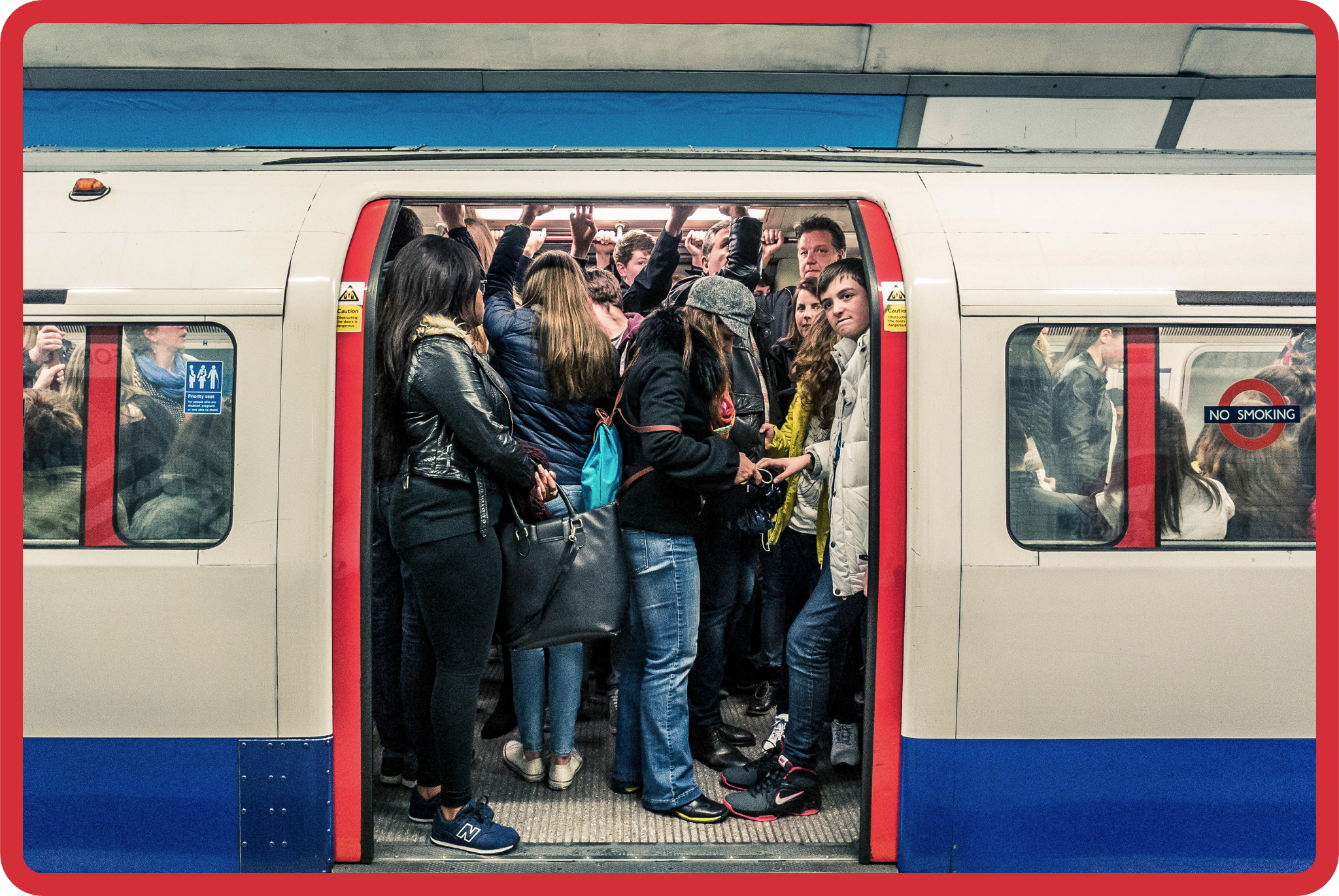
Most people on public transport are exhausted, distracted by their phones and own concerns, or too awkward to know how to manage an interaction with a badge-wearer. Are we asking too much of a 4cm piece of plastic?
The badge doesn’t exist in a vacuum: its meaning is shaped and informed by our media and politics, and right now the disabled community is in the firing line of a culture war.
And yet the disabled individual is expected to compensate for a structural problem. But if we had better infrastructure, no passengers –disabled or otherwise– would have to compete for such limited seating. The badge is merely a sticking plaster.
Shouldn’t we really be asking: why are our trains so crowded? Why are they so hot, with air-conditioning on just 40% of the network? Why are they so loud, with noise levels higher than a concert and damaging our hearing? And why can wheelchair-users still not meaningfully access most of the network?
In an essay about the sunflower lanyard, Christiane Link writes:
“When a £1.30 lanyard becomes the key to reasonable adjustments that should have been provided as standard (for everyone who needs them, without requiring disclosure or standing in a queue), then the system was broken before anyone tried to game it.”
She adds:
“Asking someone to choose between public identification and going without support is not inclusion. It’s good branding of a lack of inclusion.”
Another danger of this kind of public identification is that it can end up being enforced. In 2024, at a school in Stockport, disabled students were forced to wear sunflower lanyards, which marked them out as different and led to their being targeted by bullies.
Making the badge work for me
Despite its many flaws, I’m glad the ‘Please offer me a seat’ badge exists. I know I rely on it because I panic when I misplace it, and I miss it when I use a metro system abroad.
The badge has never worked for me in the way it promised: I’m not often offered a seat. And yet I continue to wear it because it helps me in other ways. Once a seat does become available, it emboldens me to make a beeline for it, to unashamedly claim it, to not spend my journey sweating that I’ll be forced to get up for every person older than me. It gives me what Ysé describes as a “safety net.”
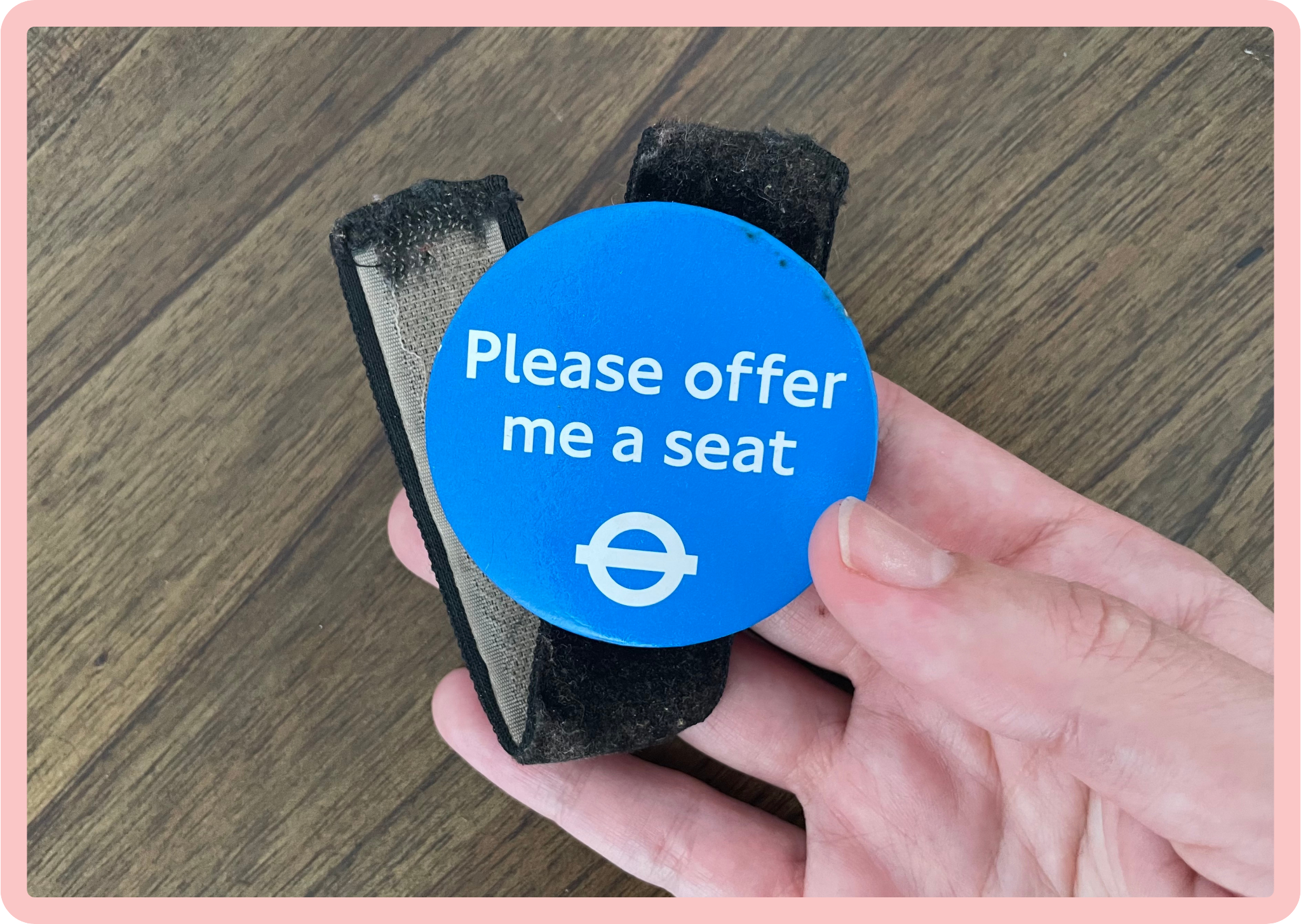
A few years ago, I ‘hacked’ my badge to make it better suit my needs. I attached it to a small piece of velvet with velcro on one side, so that I can attach it quickly to the strap of my bag before getting on the Tube, and quickly take it off when I leave. This has made my badge more visible and durable, while reducing unwanted attention.
In her brilliant book on accessibility and design, What Can A Body Do?, Sara Hendren envisions an accessible future:
“What has been relegated to private life – the realm of the family, with its invisible labors and dependencies of all kinds – might be recovered and acknowledged as a realm for public concern. Assistance, dependence, vulnerability: these embodied experiences have the dignity of the truly human about them.”
Until then? I’ll keep taking the Tube, doing my best to avoid rush hour, and central London, and hot summer days. And I’ll keep wearing my badge, keep taking it off the second I leave the station.
And I’ll try to have faith that other people will also have faith in me.
What’s the alternative?
– Celestine
Thank you…
Thank you so much to Jo, Hugh, Ysé and Helena for sharing your experiences and photos with me – I couldn’t have written this essay without you.
Thanks to Christiane Link and Sara Hendren for such interesting writing on accessibility.
Thank you once again to Theodore Fraser for review of an early draft and essential editing. Go subscribe to his new Substack, where he’s writing a serialised novel!
for some reason this article just made me cry. i've been living with M.E. for three years and recently the ableist world we live in has been getting to me. we don't have a badge like this in germany but i definitely relate to the struggle of having to ask for a seat as a young and healthy looking woman and reading everyone's experiences with this made me feel a little less alone and i needed that today. thank you for writing this, i truly appreciate it <3
Thank you for including audio. 🫶This was a fantastic listen, as well as a gut punch to hear everyone’s stories and the ableist comments made on social media.
Just as I was thinking that it shouldn’t be on people with disabilities to advocate for themselves in the moment, you went right in and started speaking about it! “The disabled individual is expected to compensate for a structural problem.” 1000%. I read an excellent essay on here about this being our role in the medical system, which really hit for me at the moment.
I also remember being that fatigued working adult, begrudgingly giving my seat up for a pregnant woman, my empathy having been vacuumed up by capitalism and abusive situations at work and home. Anyone can become disabled at any time, and I was well on my way at that point, but didn’t know it.
I’m glad I found you tonight and look forward to reading more xx